Key Takeaways
- The strongest deeper Wuhan trip usually protects one serious breakfast morning, one river-or-city-form layer, and one broader food-or-evening branch instead of turning the city into a scattered landmark chase.
- Wuhan feels distinctive because appetite, humidity, labor, student energy, and river geography still shape daily behavior very directly.
- The city works best for travelers who like places that reveal themselves through rhythm and temperament rather than through instantly legible postcard beauty.
- Foreign visitors usually enjoy Wuhan more when they stop trying to make it behave like Xi'an or Shanghai and start reading it as a big, river-made, breakfast-led city with its own stubborn tempo.
Some cities introduce themselves with monuments.
Wuhan prefers steam.
A pot lid rattling at dawn. Sesame paste loosened into noodles. Fried dough caught between office urgency and appetite. People eating quickly but not casually, because the meal is not only fuel. It is a civic habit, an inheritance of pace, humidity, labor, and self-respect.
This is why Wuhan confuses first-time visitors who arrive expecting a clearer visual thesis.
The city does not make its strongest argument from a single skyline line or one unforgettable old quarter. It makes it from repetition: three towns facing each other across water, bridges tightening space that still feels large, heat that changes the body’s patience, mornings that begin with purpose, nights that stretch along riverbanks and food streets rather than concluding neatly.
Wuhan is not a city that seduces instantly.
It is a city that accumulates.
One breakfast into one ferry of thought, one museum into one lake edge, one late meal into one humid walk home. By the second day, something has settled in. The place begins to feel less like an itinerary problem and more like a human one: how people live in a city this broad, wet, edible, argumentative, and alive.
Who this is for
This guide is for readers who want a richer answer to questions like these:
- what actually makes Wuhan worth time beyond its reputation for breakfast?
- why does the city feel more sprawling, more ordinary, and more emotionally convincing than some better-known first-trip stops?
- how do the three towns, the rivers, the universities, and the food culture fit together?
- what kind of traveler should give Wuhan more than a hurried overnight?
If your question is narrower, start with one of these:
In practice
The strongest deeper Wuhan trip usually balances three versions of the city:
- the morning city of hot dry noodles, sesame aroma, soup steam, and the disciplined appetite of guozao
- the river city of bridges, separate urban cores, ferries of imagination, and a scale that never quite contracts into one simple center
- the lived city of students, workers, temple lanes, museum afternoons, late dinners, and the practical generosity of a place that does not perform itself too neatly
If you only chase landmarks, Wuhan can feel underdramatic.
If you only eat breakfast and leave, it can feel underread.
The richer version lets the city be what it really is: broad, humid, muscular, and unexpectedly intimate once you surrender to its rhythm.
A city split by water and stitched by habit
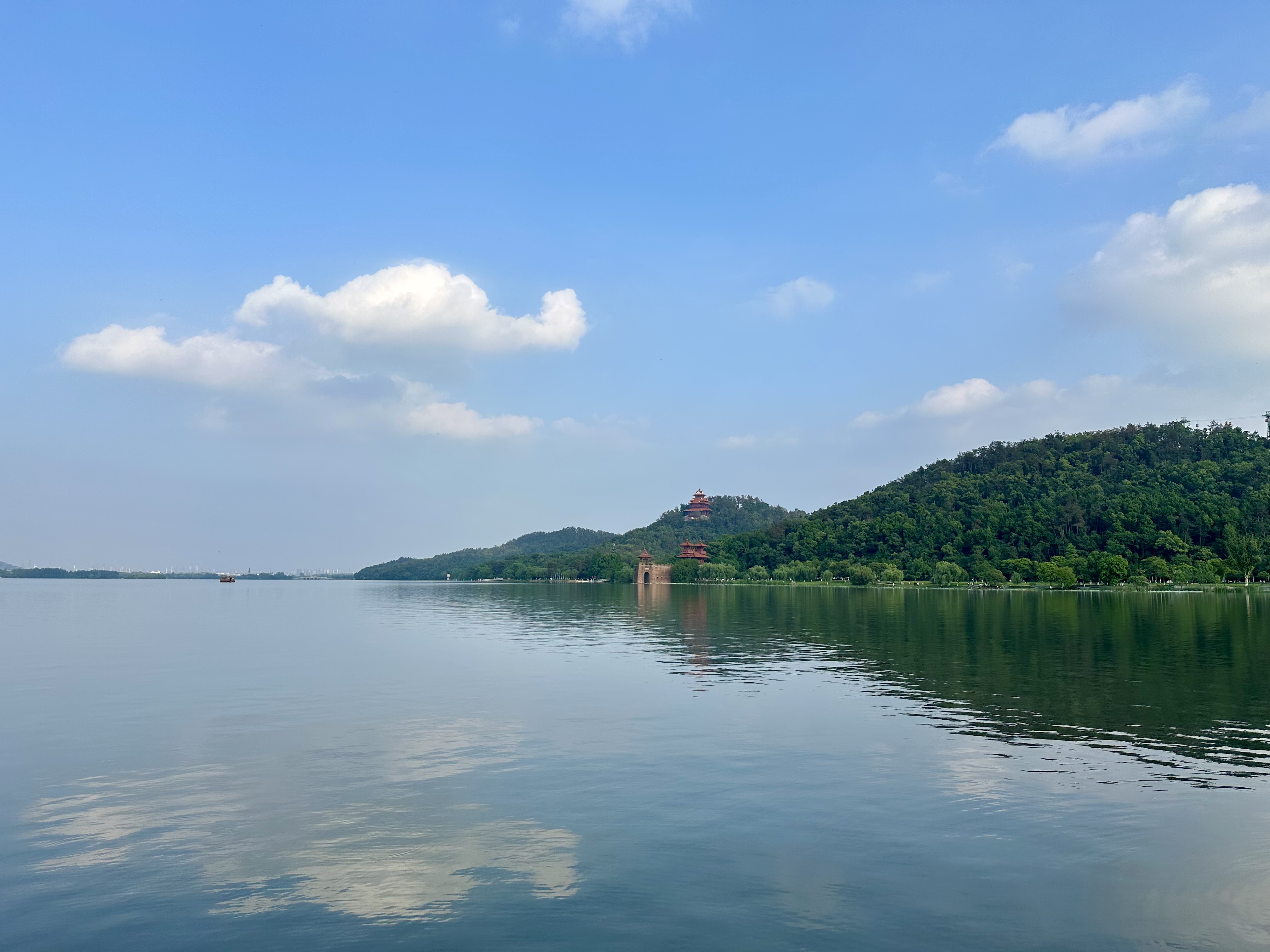
Wuhan makes more sense when you stop looking for one old center.
Wuchang, Hankou, Hanyang: together they form not a tidy civic whole but an argument held together by rivers, bridges, ferries, industry, education, and time. This matters because the city still behaves like a place with multiple temperaments rather than one dominant urban personality.
One side feels more monumental, another more commercial, another more residential or temple-softened, another more university-inflected, another more stubbornly ordinary. The scale of Wuhan is therefore not only physical. It is temperamental. You do not cross merely from one district to another. You cross between moods.
This is one reason the city resists being consumed quickly. It has too much lateral life.
The rivers keep Wuhan from becoming abstract
Many large Chinese cities can now be experienced as seamless metro systems with attractions attached. Wuhan still feels river-made. Water interrupts certainty. Bridges restore it. Weather changes the surface. Even when you do not take a cruise or ferry, the rivers remain in the city’s psychology. They widen the imagination. They make the map feel larger. They preserve a little of the old dockside fact that movement here was never as simple as straight lines on land.
That is why Wuhan nights can feel so persuasive. The river does not merely decorate them. It gives them room.
Wuhan wakes before it speaks
This may be the city’s deepest difference.
Breakfast here is social structure
In many places, breakfast is either private or perfunctory.
In Wuhan it is public.
That is what people mean, often without saying so, when they speak of guozao. It is not only a menu. It is an ethic of beginning the day properly, in company with others, under the pressure of schedules, hunger, weather, and habit. Hot dry noodles matter, yes, but so do soup dumplings, fried things, rice parcels, soy milk, beef noodles, and all the other morning forms by which a city convinces itself to continue.
The beauty of Wuhan breakfast lies partly in its lack of self-consciousness. It is not trying to flatter the visitor. It is simply doing what the city does.
Appetite becomes a way of measuring seriousness
This is why one good breakfast morning can tell you more about Wuhan than three half-hearted attraction stops. The city respects appetite that shows up on time. It respects hot food eaten without unnecessary sentimentality. It respects ordinary repetition done well.
There is something morally clarifying about that.
Wuhan does not ask whether you are cultured enough to understand it.
It asks whether you came hungry.
If food is already your route into the city, keep Wuhan Breakfast Culture: How to Do Guozao Without Guessing Blind and Wuhan for First-Time Visitors: Why Breakfast Culture Alone Can Justify the Stop nearby.
Heat, labor, and the city’s bluntness
Wuhan is not delicate.
That too is part of its charm.
Climate here changes temperament
The summer heaviness, the damp air, the long warm seasons, the bodily awareness of weather: these leave marks on the city’s mood. People speak more directly. Meals become stronger. Patience shortens in some directions and lengthens in others. The body learns to negotiate sweat, distance, and shade as practical facts rather than poetic atmosphere.
This gives Wuhan a kind of muscular realism.
You feel it in the food, in the streets, in the way the city refuses overrefinement. Even its beauty often arrives in sturdy form: a broad lake, a heavy bridge view, a temple court with human traffic still around it, a night scene that remains attached to ordinary life.
The city still remembers work
Wuhan’s character was not built for leisure alone. It carries industry, transport, education, and central-China scale in its bones. That background matters. It keeps the city from becoming too picturesque for its own good. There is still an undernote of labor in the place, as though every meal and stroll sits not far from a more practical world of schedules, shipments, steel, classes, shifts, and movement.
This is one reason the city feels convincing.
It is hard to fake this kind of weight.
The intellectual undercurrent
Not every first-time visitor notices this at once, but Wuhan has thought in it.
A city of students behaves differently
Universities change urban weather. They bring argument, cheaper meals, secondhand books, restlessness, romantic seriousness, and the sense that a city remains in conversation with its future even when it looks tired. Wuhan benefits from this. Beneath the breakfast steam and river scale, there is a quieter current of reading, studying, and reinterpreting life in a city that is large enough to be hard, but still intimate enough to be argued over.
This undercurrent matters because it complicates the stereotype of Wuhan as only hearty and practical. The city also has reflection in it. Bookshops, campus edges, slower lake paths, older neighborhoods where people still talk in long, unhurried ways: these keep the place from becoming too purely functional.
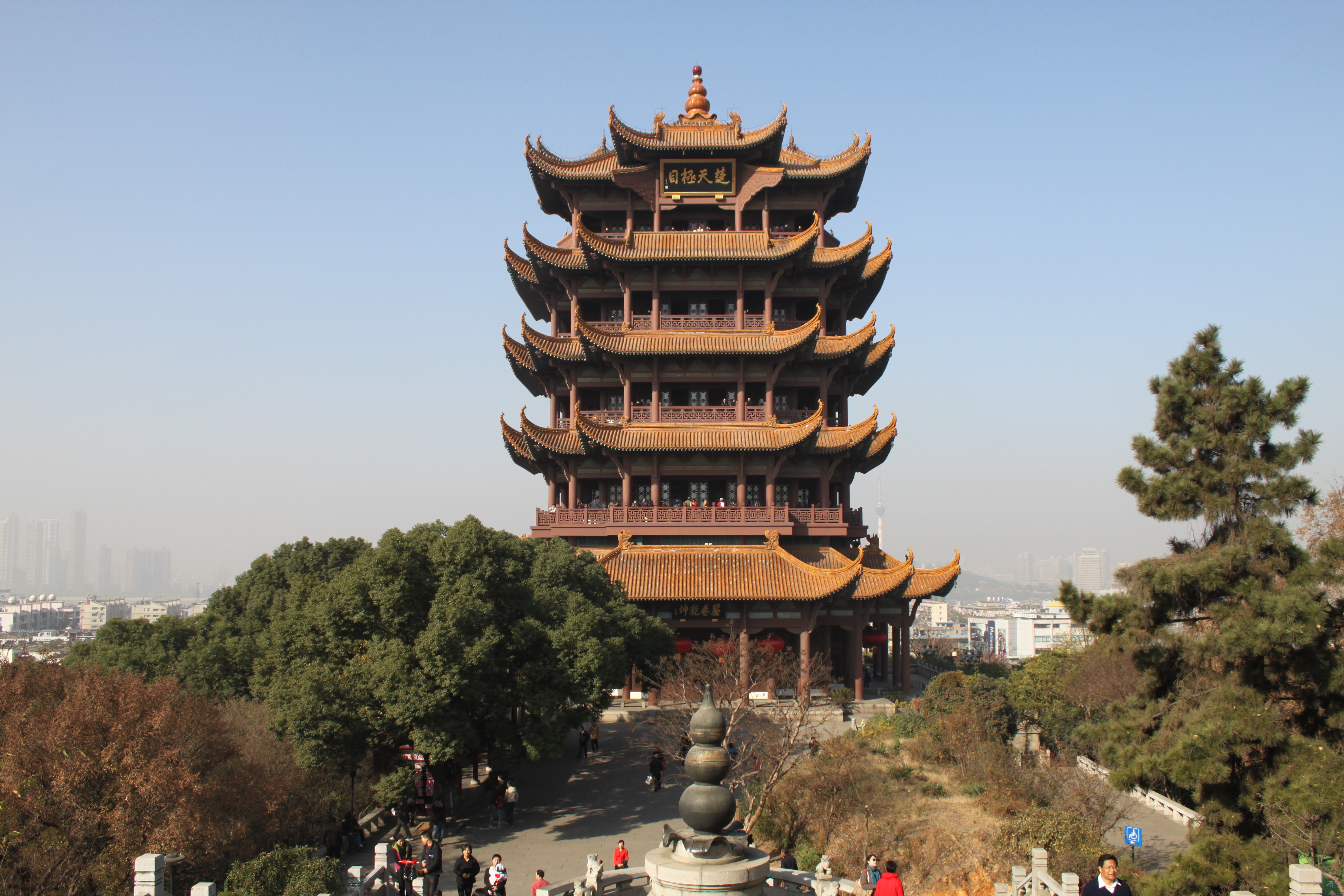
Yellow Crane Tower works best as symbol, not sole justification
Yellow Crane Tower matters because every city deserves at least one act of self-mythology. But it should not be asked to carry all of Wuhan alone. The city is too broad, too edible, too socially textured for that. The tower is strongest when it gives shape to the city in the mind and then yields the stage back to breakfast, bridges, museum afternoons, temple quiet, and evening river air.
That is a useful principle in Wuhan generally: let symbols orient the trip, but do not force them to replace lived atmosphere.
The softer city still exists
Wuhan is not only breakfast and bluntness.
East Lake gives the city breath
East Lake matters because it shows Wuhan with its shoulders lowered. The city is large enough, hot enough, and socially dense enough that one needs a counterweight: water, trees, bikes, campus air, open space, the sense that a day can elongate without becoming inefficient. East Lake is not there to deliver a grand shock. It is there to prove that Wuhan also understands reprieve.
Temple and old-street branches matter for the same reason
Guiyuan Temple and Tanhualin are not the city in miniature. They are the softer registers that keep it humane. They show that Wuhan, for all its size and practical force, still knows how to hold smaller scales of attention: incense, masonry, tea, shade, side-street talk, lingering rather than consuming.
These places matter because they stop the city from becoming only an industrial-river metaphor in the traveler’s mind.
Evening is when Wuhan settles into itself
Some cities peak at dawn.
Wuhan has a second life after dark.
The river gives the night its width
Whether through a formal Yangtze River night cruise or a looser riverside finish, evening in Wuhan benefits from scale. Light reflecting on wide water, bridges holding lines across the dark, humid air carrying food smells farther than it should: the city does not become glamorous exactly, but it becomes calm in a broad-shouldered way.
Jianghan Road and the dinner city
Jianghan Road Pedestrian Street and the surrounding evening meal logic matter because Wuhan after dark should still be social. This is not a city best concluded with one isolated cocktail in a sealed tower. It wants movement, neon, skewers, argument, wandering, one more bowl, one more snack, one more walk before the heat finally loosens.
That is why Wuhan nights often feel more satisfying than they look in itinerary summaries.
They are not built to impress from above.
They are built to be inhabited.
A better shape for this version of Wuhan
If you want Wuhan to feel like a city rather than a connector, a stronger shape usually looks like this.
Morning 1: let breakfast establish the city’s terms
Protect one serious breakfast morning:
- not a rushed hotel breakfast
- not one symbolic noodle photo
- but a real guozao sequence with time to observe pace, appetite, and social texture
This is where Wuhan first becomes itself.
Day 1: choose one symbolic or cultural branch
After breakfast, keep the day coherent:
Wuhan usually improves when you avoid excessive cross-city zigzagging.
Evening: give the city one wide horizon
Protect one evening for:
The point is not to maximize sights.
It is to let Wuhan’s scale become emotionally legible.
Practical details that actually improve Wuhan
This kind of feature should still help people travel better.
Hotel choice matters because the city is emotionally wide
Wuhan’s districts are not interchangeable. Where you sleep determines whether the city feels coherent or like a string of disconnected commutes. If the base still is the issue, Best Area to Stay in Wuhan for First-Time Visitors is the right next page.
Rail timing can accidentally ruin the stop
Wuhan weakens fast when it is squeezed between arrivals and departures with no honest morning protected. The city needs at least one breakfast window and one unhurried block to become persuasive.
Two days usually reveal much more than one
One night can prove the city is interesting.
Two days can show why it matters.
That extra time allows Wuhan to move from flavor to form: from a good bowl of noodles to a real understanding of how water, heat, appetite, and urban scale have made a distinct place.
Wuhan’s real gift
In the end, Wuhan offers something many travelers do not know they are missing.
Not spectacle.
Not prestige.
Not a polished lesson in how to admire China correctly.
Something better.
A city with enough appetite to feed its own mythology, enough roughness to stay credible, enough breadth to resist simplification, and enough morning seriousness to remind you that daily life, done properly, can be one of the great cultural arts.
FAQ
Is Wuhan only worth visiting for breakfast culture?
Breakfast culture is the clearest doorway into Wuhan, but the city becomes much richer once travelers also understand its three-town geography, dockside temperament, river evenings, and the way food, weather, and scale shape everyday life.
Why does Wuhan feel different from other big Chinese cities?
Wuhan is a river city before it is a skyline city. Its scale, bridges, humidity, breakfast ritual, student presence, and practical bluntness give it a more lived-in and less polished character than many first-trip defaults.
What kind of traveler tends to love this deeper version of Wuhan?
It works especially well for travelers interested in local food, urban texture, river geography, ordinary city life, and places whose identity emerges through repetition, appetite, and social atmosphere rather than only through famous monuments.