Macau
Macau, Facades, Fortune, and the Back Lanes: Where Empire Never Fully Left
Macau is a city of residues: church stone, incense smoke, tiled squares, casino light, and a food culture that remembers empire without ever surrendering to it.
Reported city features, practical travel notes, and destination coverage across China.
Macau
Macau is a city of residues: church stone, incense smoke, tiled squares, casino light, and a food culture that remembers empire without ever surrendering to it.
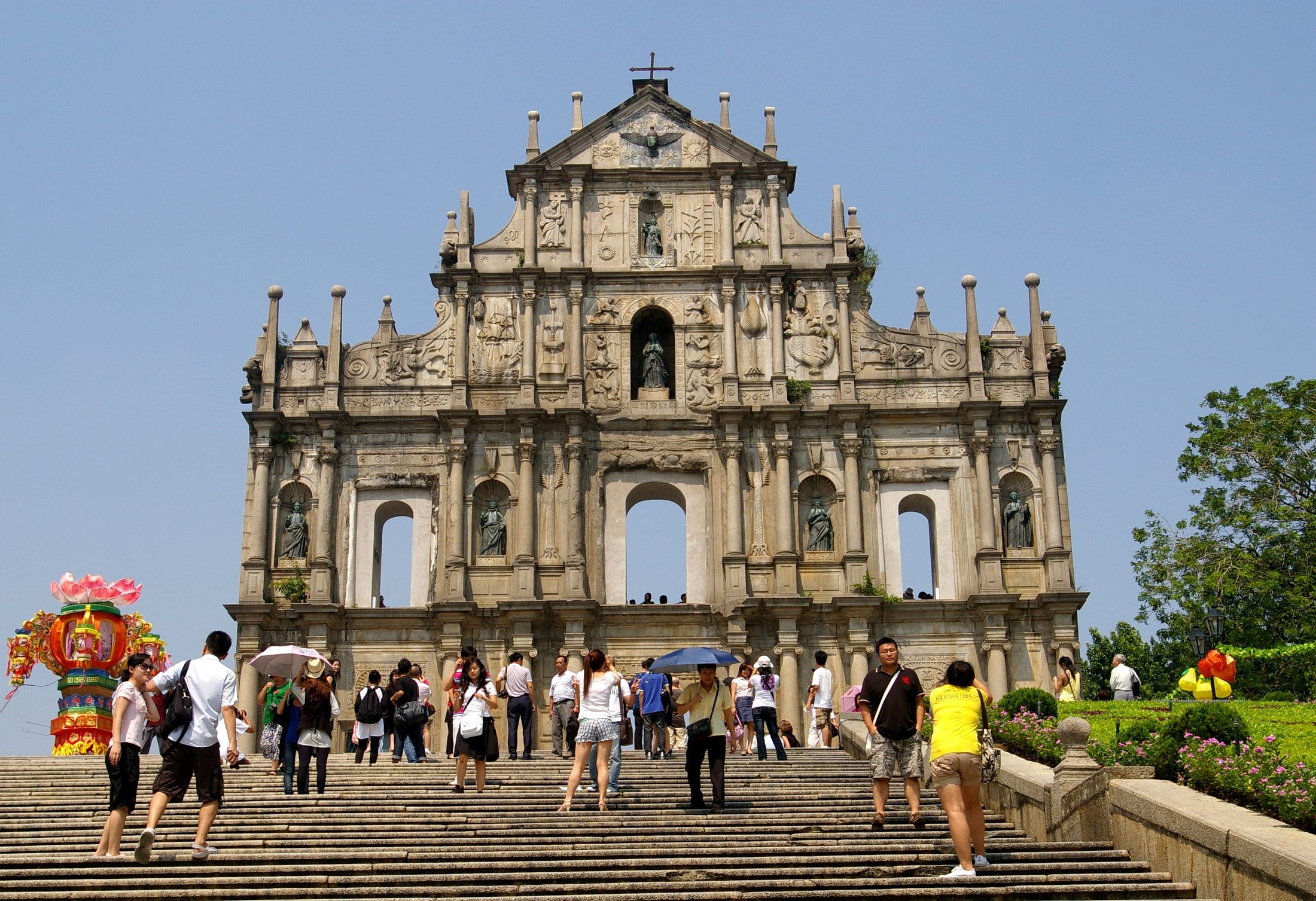
Macau is easiest to dismiss if you insist on one clean story.
It is not Portugal in Asia. It is not simply a casino city. It is not only a UNESCO old quarter. It is not nostalgia, not parody, not pure continuity, not pure spectacle.
It is a place where several unfinished histories were forced to share the same pavement.
That is why the city can feel so strange, and so memorable, even on a short stay.
You turn one corner and find pastel facades, Catholic masonry, and wave-patterned stone underfoot. Turn another and incense is burning at A-Ma Temple, the air suddenly older and more southern. A few minutes later the skyline flares into gaming towers and sealed hotel climates. Somewhere between them a plate of Macanese food arrives, carrying empire not as theory but as dinner.
If you want the rest of our Macau coverage in one place, start with the Macau destination hub.
This guide is for readers who want a better answer to questions like these:
If your question is narrower, these pages may be the better tool:
The strongest deeper Macau trip usually balances three versions of the city:
If you only do the ruins and leave, Macau can feel decorative.
If you only do the casinos, it can feel placeless.
The city becomes interesting once those two versions begin to speak to each other.

Most first-time visitors begin around Senado Square and the Ruins of St. Paul’s.
That is correct. The old core is still the quickest way to understand the city.
But the point is not merely that the buildings are photogenic. The point is that Macau’s central district still stages one of the strangest urban conversations in Asia. Portuguese paving patterns, baroque church fronts, Cantonese shop habits, souvenir excess, Catholic iconography, dried-meat counters, alley shrines, and apartment life all occupy the same field of vision.
In another city this might have turned into sterile heritage. In Macau it remains usefully messy. The facades are preserved, but the life around them has not agreed to become purely historical. Laundry, scooters, school runs, pastries, incense, and tour groups all keep interrupting the postcard.
That interruption is healthy. It prevents the city from becoming a costume.
One of the most serious mistakes a visitor can make is to treat Macau as a visual destination only.
The city thinks through appetite.
Macanese cuisine matters here not because it offers one more fusion talking point for travel copy. It matters because it is one of the few truly durable records of the city’s mixed inheritance. Pork, spice, stock, coconut, olive, soy, baked crust, stew logic, and port-city improvisation all live in the kitchen with far less ideological fuss than they do in museums.
This is why the city often feels best when broken into edible chapters. A pastry stop in the old core. A proper meal that slows the afternoon down. A second branch out toward Taipa Village when the city wants to soften. A late-night drink or dessert after the gaming floors have already made their bright, vulgar case for themselves.
Macau has always understood that pleasure can be both refined and gaudy. Food is where those two instincts make peace.

Travelers sometimes overread Macau through the Portuguese layer because it is what first registers visually.
That is a mistake of optics.
The southern Chinese structure underneath remains decisive. A-Ma Temple is not an ornamental counterpoint to the colonial story; it is a reminder that the city was never spiritually or culturally emptied and refilled. The same is true of neighborhood shrines, family canteens, language habits, and the deeply practical texture of everyday life away from curated walking routes.
Macau is interesting precisely because the overlays never fully replaced what was already there. They accumulated. They sat on top of one another. They stained each other. That is a different condition from seamless cosmopolitanism. It is messier, and more revealing.
If the peninsula gives Macau its historical argument, the southern side gives it breathing room.
Taipa Village works because it remains human in scale after the old core has already done the heavy symbolic labor. It has enough atmosphere, enough food, enough side-street looseness to feel like a real continuation rather than a duplicate of Senado Square. Coloane Village goes further, thinning the tempo and letting the city exhale.
These districts matter because Macau can otherwise become overcompressed in the mind. Too many facades, too many queues, too many sweets, too many photo angles, too much one-day urgency. Taipa and Coloane reintroduce weather, shade, strolling, and a less performative sense of place.
They do not cancel the theatrical Macau. They save it from monotony.
It is tempting for a certain kind of highbrow traveler to dismiss Cotai Strip as pure bad taste and move on.
That is too easy.
Cotai is excessive, synthetic, and often absurd. It is also one of the central facts of contemporary Macau. The scale of money, labor, fantasy, and managed atmosphere there cannot simply be waved away because it lacks old-stone charm. If you care about how cities mutate under tourism and capital, Cotai is not a sideshow. It is evidence.
The important thing is not to mistake it for the whole city.
Used selectively, Cotai clarifies Macau. After the chapels, staircases, temples, and village lanes, its sealed air and endless plush become almost anthropological. You begin to see the city as a machine for staging different ideas of luck, prestige, and escape.
That tension between shrine and casino, saint and baccarat table, is not accidental. It is the city’s modern grammar.
Macau and Hong Kong are close enough to be paired and different enough to justify the pairing.
Hong Kong is a city of pressure and ascent. Macau is a city of residue and rehearsal.
Hong Kong moves with steel nerves. Macau lingers in stone, glaze, and appetite.
Hong Kong convinces through force of systems. Macau persuades through atmospheric contradiction.
That is why the handoff between them can feel so intelligent on a South China route. One teaches you how a city survives by speed. The other shows you how a city survives by layering incompatible inheritances until they become its style.
Macau is not grand in the way Beijing is grand. It is not fluid in the way Shanghai is fluid. It is not overwhelming in the way Hong Kong can be overwhelming.
Its power is smaller, stranger, and more lingering.
You remember a staircase, a facade, a tiled square after rain, incense under a dark roof, the sudden flash of a casino lobby, the melancholy dignity of a church front surviving in subtropical light, the way Portuguese and Cantonese histories still refuse to separate cleanly.
That refusal is the city.
Macau does not ask you to admire a single pure identity. It asks you to stay long enough to appreciate mixture, residue, compromise, appetite, and the odd grace with which old empires continue to haunt ordinary streets.
No. Cotai is part of the story, but Macau becomes much richer when travelers also spend time in the old core, at A-Ma Temple, around Taipa Village, and in the city's food culture, where Portuguese and southern Chinese influences still meet in everyday form.
Macau is smaller, slower, and more layered by residue. Hong Kong is a city of motion and pressure; Macau is a city of facades, memory, performance, and improbable coexistence between shrines, plazas, kitchens, and gaming palaces.
It works especially well for travelers who like compact historic cities, architecture, religious and colonial layers, food history, atmospheric night walks, and places whose contradictions are visible at street level.
Publication Note
First published 7/14/2026 · Updated 7/14/2026
We revisit city guides when route logic, stay advice, or local assumptions shift enough to change the decision a reader might make.
Back To The City
The city page gathers stays, neighborhoods, pacing, and practical reads in one place.
Planning Support
When the city is clear but the pacing, hotel geography, or onward shape still is not, a fresh read often reveals the real sticking point.
About The Team
Macau City Desk
The Macau Editorial Desk maintains guides, place pages, and planning coverage related to Macau. Its focus is helping readers decide when Macau works best as a day trip, when it deserves an overnight stay, and how to balance heritage areas with resort districts without wasting time in cross-city movement.
Macau
For many first-time visitors, 1 to 2 days is the right Macau answer because the city is strongest as a compact heritage-and-entertainment contrast stop, not a long standalone chapter.
Macau
A strong first Macau itinerary usually works best as one Macau Peninsula heritage day and one Taipa or Cotai contrast day.
Route Shape
South China works best when Hong Kong stays the main urban anchor, Macau stays the compact contrast stop, and only one mainland partner is added.
Route Shape
South China works best when Hong Kong stays the main urban anchor, Macau stays the compact contrast stop, and only one mainland partner is added.