Key Takeaways
- The strongest deeper Hangzhou trip usually balances one West Lake layer, one tea-or-temple branch, and one more contemporary design or urban-culture branch instead of treating the city as scenery alone.
- Hangzhou feels distinctive because Song-dynasty aesthetics, temple quiet, tea-country slowness, platform capitalism, and highly polished contemporary taste now coexist inside the same urban psychology.
- The city works especially well for travelers who care about atmosphere, visual precision, and the relationship between beauty and ambition.
- Foreign visitors usually enjoy Hangzhou more when they stop treating it as a soft add-on to Shanghai and start reading it as a city where landscape, money, and restraint have learned to live together.
Hangzhou has always had the problem of being overpraised. Once a city is filed under beauty, people stop looking for its harder truths.
They come for West Lake, for willow shade and boat wakes and tea on a damp hillside, and only later notice the other Hangzhou moving just behind the trees: money, logistics, design discipline, platform ambition, and a very modern confidence about scale.
What makes the city interesting is not simply that both worlds exist. Plenty of Chinese cities contain old scenery and new capital. Hangzhou is stranger than that. It has taught retreat and ambition to speak in the same tone.
A temple afternoon, a meticulously branded cafe, a founder’s office, a tea slope after rain, a retail complex arranged with near-monastic calm: the transitions are so smooth they can seem almost unreal.
That is why Hangzhou lingers. It does not stage a quarrel between serenity and appetite. It turns them into one local style.
If you want the rest of our Hangzhou coverage in one place, start with the Hangzhou destination hub.
Who this is for
This guide is for readers who want a richer answer to questions like these:
- what actually makes Hangzhou distinctive beyond West Lake scenery?
- why can the city feel both meditative and highly commercial at the same time?
- how do tea country, temple life, design culture, and digital ambition fit together?
- what kind of traveler should treat Hangzhou as more than a Shanghai add-on?
If your question is narrower, these pages may be the better tool:
In practice
The strongest deeper Hangzhou trip usually balances three versions of the city:
- the classical Hangzhou of water, willows, tea, pagodas, temple quiet, and carefully edited scenic time
- the entrepreneurial Hangzhou of platform economy confidence, polished consumption, and a very modern relationship to money
- the design-conscious Hangzhou where craft, retail, food, and urban taste are all arranged with almost algorithmic precision
If you only do the lake, Hangzhou can feel beautiful but oversimplified.
If you only chase contemporary lifestyle districts, you miss the landscape intelligence that still governs the city.
The richer version lets Hangzhou feel ancient, lucrative, serene, and faintly surreal all at once.
The algorithm of clouds
One reason Hangzhou fascinates sophisticated travelers is that there is almost no buffer between its spiritual imagery and its commercial velocity.
The city does not separate retreat from ambition
In some places, temple quiet and financial ambition belong to different geographies.
In Hangzhou, they can belong to the same afternoon.
That is one of the city’s strangest truths.
A traveler can spend the morning learning how to pace West Lake, the afternoon heading toward Longjing Village or Lingyin Temple, and the evening back in a district shaped by luxury retail, platform-era wealth, younger digital workers, and a contemporary aesthetic discipline that feels almost frictionless.
This is not hypocrisy.
It is Hangzhou’s operating system.
Hangzhou’s elite imagination is still unusually aesthetic
Many cities generate wealth. Fewer cities insist that wealth be wrapped in composure.
Hangzhou’s entrepreneurial energy often carries a strong visual code: minimalism, natural materials, clean interfaces, tea-toned calm, understated confidence, and a refusal to look too noisy even when the underlying ambition is immense. The city likes success, but it prefers success that can pass for taste.
That is why Hangzhou can feel so different from louder commercial centers. Here, money often wants to appear softened by rain, by trees, by ceramics, by tea, by polished concrete, by silence.
That self-styling is part of the city’s contemporary drama.
If the digital branch is already the thing you want to understand, Can You Visit Alibaba Campus in Hangzhou? What Is Actually Open to Visitors is the cleanest supporting read.
West Lake still governs the city’s mind
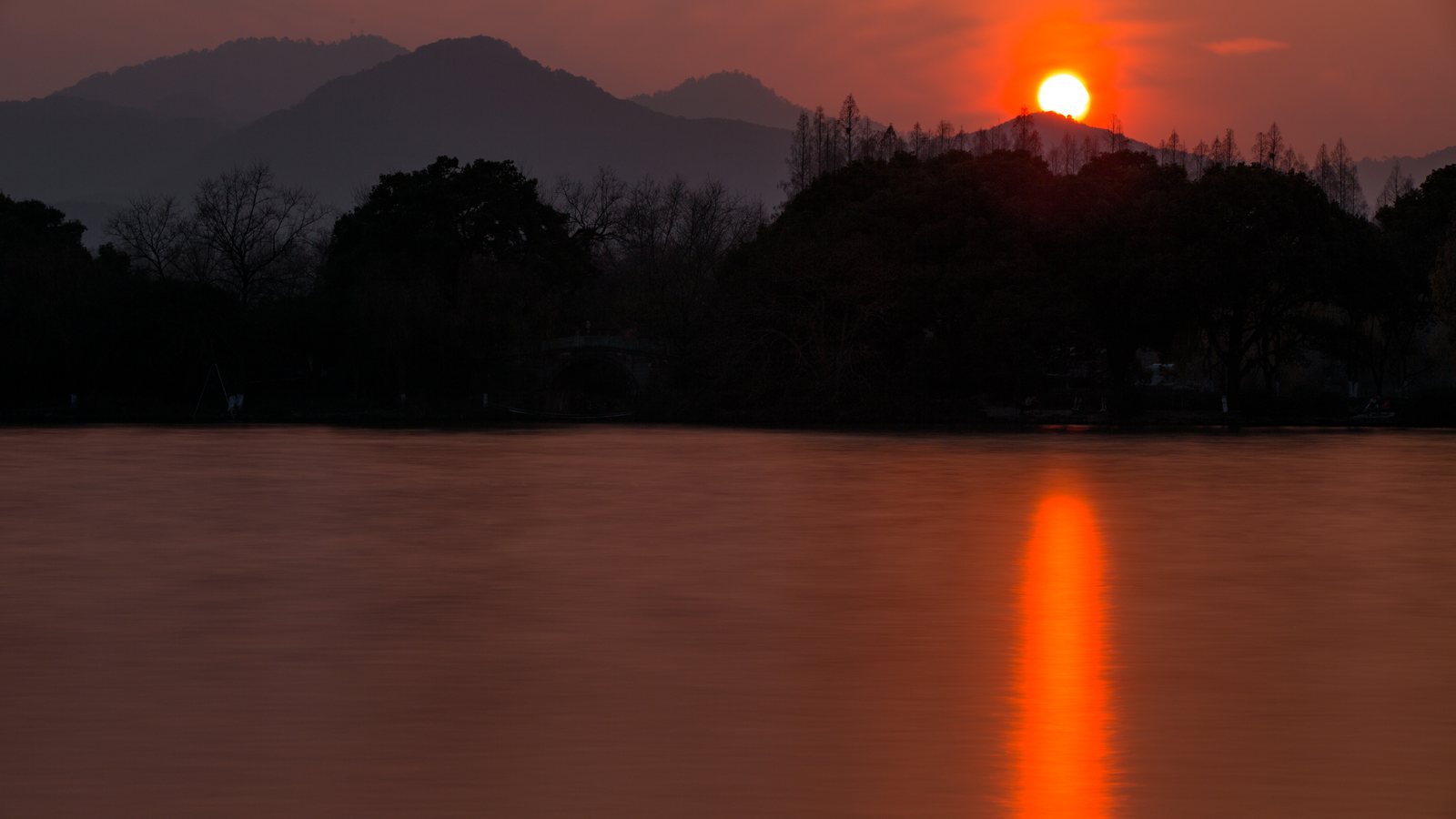
For all of Hangzhou’s modernity, the city still thinks through landscape.
West Lake is not only scenery. It is urban software
Foreign visitors often make the mistake of treating West Lake as one attraction among others.
That reading is too small.
West Lake matters because it still teaches the pace of the city. It slows decision-making. It encourages selective movement instead of conquest. It reminds the traveler that Hangzhou is one of the rare major Chinese cities that does not become more rewarding by packing every hour.
That principle shapes the best Hangzhou trip far beyond the lake itself.
The city is strongest when the lake stays an atmosphere, not a checklist
Broken Bridge, Leifeng Pagoda, causeways, lake edges, boat views, and seasonal shifts all matter. But the point is rarely to collect them mechanically.
The real success condition is whether Hangzhou begins to feel composed.
That is why West Lake belongs in this feature not as one famous stop, but as the city’s emotional grammar.
If this core layer still needs tactical shaping, A Practical 1-Day Hangzhou Itinerary for First-Time Visitors and West Lake in Hangzhou: Is It Worth More Than a Quick Loop? are the practical next pages.
The path of two leaves

To understand Hangzhou properly, you eventually have to leave the lakefront performance and head toward tea country.
Longjing is not a beverage topic. It is a philosophy of tempo
Western visitors often arrive with a mental map built around coffee, bar culture, and fast urban consumption. Hangzhou asks for something else.
Longjing Village matters because it shows what the city considers a worthy form of slowness. Tea here is not only agricultural output or cultural display. It is a way of defending attention.
That is why Longjing works so well inside a broader Hangzhou stay. It pushes the city away from scenic tourism and toward sensibility.
Tea country gives the city its second register
If West Lake is Hangzhou’s public face, Longjing is its quieter internal language.
The roads soften, the air changes, the built environment becomes more hillside and less urban, and the traveler starts to understand that Hangzhou’s calm is not merely inherited from old poetry. It is still actively produced through space, habit, and a refined idea of what counts as a good day.
The city becomes easier to love at that point.
If tea-country Hangzhou is already winning, Longjing Village in Hangzhou: Is It Worth Visiting for Tea and Scenery? and Longjing Village or China National Tea Museum for First-Time Visitors are the key supporting reads.
Temples, wetlands, and the art of controlled retreat
Hangzhou also excels at something many cities fake badly: making retreat feel structurally believable.
Lingyin and temple quiet still matter because the city needs them
Lingyin Temple is not interesting only as a religious or historical site.
It is interesting because it helps explain Hangzhou’s self-image.
This is a city that wants its ambition ritually washed. Temple quiet, vegetarian meals, bamboo shade, and an older Buddhist landscape vocabulary still offer a legitimate counterweight to speed, status, and commercial optimization. Even visitors who are not religious often feel why this matters almost immediately.
The city seems to need places where performance falls away.
Xixi broadens the picture beyond the lake
Xixi Wetland shows another side of the same instinct.
It gives Hangzhou a wider ecological softness, a greener, less iconic scenic layer that makes the city feel less dependent on one masterpiece lake. If West Lake is the classical painting, Xixi is the atmospheric side panel that reveals the city still knows how to value texture over monumentality.
Hangzhou’s modern identity could easily have flattened its older natural intelligence.
It did not.
If these calmer branches are already likely, Lingyin Temple in Hangzhou: Is It Worth It on a First Trip? and Xixi Wetland in Hangzhou: Is It Worth It for First-Time Visitors? are the sharper child pages.
Designed for the grid
Hangzhou’s contemporary youth culture is not especially loud.
It is edited.
The city prefers precision to rebellion
This is where Hangzhou diverges from places like Chengdu or Guangzhou.
Its younger creative culture often expresses itself less through friction and more through finish: cleaner silhouettes, stronger visual control, quieter luxury cues, digital-native aesthetics, and a deep comfort with making money without pretending money is vulgar.
That can produce a very specific atmosphere in newer design-and-retail districts. Even when the underlying culture is entrepreneurial, the surface often remains composed, curated, almost meditative.
Hangzhou’s coolness is rarely chaotic.
It is optimized.
Design culture here sits very close to consumption
That is not a criticism. It is a local truth.
In Hangzhou, design, fashion, digital labor, content production, and lifestyle display often overlap seamlessly. This is one reason the city can feel so contemporary to foreign readers interested in how Chinese urban taste is evolving. The city no longer treats old aesthetics and platform-era aspiration as enemies. It lets them trade materials.
This is also why Hangzhou can feel faintly uncanny. The line between serenity and branding is sometimes thinner than a sheet of silk.
The old craft afterlife
Hangzhou’s refinement is not made only of tea and landscape.
It is also made of tools, objects, and older systems of touch.
The canal and craft museums show a more material Hangzhou
If you want to understand the city beyond the lake, the canal-side and museum layer matters.
Hangzhou Arts and Crafts Museum is especially useful because it reveals a more tactile Hangzhou: scissors, umbrellas, silk traditions, workshop logic, and the long history of elegant objects that were meant to be used rather than merely admired.
This broadens the city beautifully. Hangzhou stops feeling like pure atmosphere and begins to feel like a place that has always known how to turn refinement into objects.
Craft survives here because taste remained practical
That is one of Hangzhou’s most attractive qualities.
The city has a strong historical appetite for things that are both beautiful and useful. That habit still survives in contemporary design culture, in carefully chosen materials, in retail environments, in museum logic, and in the general expectation that even daily life should maintain a degree of finish.
If the craft-and-museum branch sounds strongest, Best Museums in Hangzhou for First-Time Visitors is the right support page to keep beside this feature.
The city still knows how to eat
Outsiders sometimes underrate Hangzhou’s food because the city is so visually dominated by lake, tea, and atmosphere.
That is a mistake.
Hangzhou’s food works by subtle insistence
This is not a city that always shouts its culinary case.
Instead, it wins through texture, ingredients, craft, and the confidence of ordinary repetitions: noodles, tea-linked dishes, freshwater flavors, smaller sweets, and the kind of food that fits a city trying to remain elegant without becoming bloodless.
One of the most useful clues is that Hangzhou still respects the bowl of noodles and the line outside a place that does one thing properly. That tells you the city has not fully surrendered its daily appetite to branding.
Food anchors the city back to the street
Hangzhou can otherwise risk floating upward into image alone.
Meals bring it back down.
They remind the visitor that refinement here is not only scenic or architectural. It is edible, repeated, practical, and still connected to local loyalties.
If food is the real route into Hangzhou for you, What to Eat in Hangzhou for First-Time Visitors and Where to Eat in Hangzhou for First-Time Visitors are the strongest immediate next reads.
Hangzhou becomes most magical when you stop dividing the city in two
It is tempting to say there is an old Hangzhou and a new Hangzhou, a Zen Hangzhou and a tech Hangzhou, a poetic Hangzhou and a capitalist Hangzhou.
The city itself does not seem especially interested in that separation.
It simply lets them overlap.
That is why the city can feel so contemporary. Hangzhou does not perform a clean opposition between purity and ambition. It tries to make them share an interface.
Sometimes that produces real grace.
Sometimes it produces something almost absurd.
Either way, it is never boring.
Practical details that improve the deeper Hangzhou
Deep writing should still help people travel well.
Hangzhou usually deserves one night more than most people first assume
On paper, the city often looks like a clean Shanghai extension.
In practice, one night usually improves everything: West Lake after crowds thin, a calmer meal rhythm, better access to morning tea-country or temple branches, and enough emotional space for the city to become more than a scenic interruption.
If that decision is still open, How Many Days in Hangzhou for First-Time Visitors and Hangzhou for First-Time Visitors: When the City Is Worth More Than a Quick Add-On are the next pages that matter.
The city weakens when you overstack scenic branches
This is the main first-time mistake.
West Lake plus Lingyin plus Longjing plus Xixi plus museum plus Hefang plus another shopping or design block can quickly turn a delicate city into a burdensome one.
Hangzhou is a city of edited combinations, not maximum extraction.
Your base shapes whether Hangzhou feels calm or awkward
If the hotel base fights the actual rhythm of your stay, the city can become strangely logistical. If the base supports the branch you care about, Hangzhou often feels effortless.
If that question is still open, Best Area to Stay in Hangzhou for First-Time Visitors and East Side of West Lake or Wulin: Where to Stay in Hangzhou for First-Time Visitors are the highest-value practical reads.
Final answer
Hangzhou is one of the few Chinese cities where beauty still behaves like infrastructure.
The lake shapes the pace.
Tea shapes the day.
Temples shape the city’s idea of retreat.
Technology shapes its wealth.
Design shapes its self-respect.
And all of it somehow survives inside one urban temperament that is smoother, smarter, and stranger than many first-time visitors expect.
Hangzhou is not merely a scenic city.
It is a city that turned elegance into a survival strategy.
FAQ
Is Hangzhou only worth visiting for West Lake?
No. West Lake is the core reason many travelers come, but Hangzhou becomes much more rewarding when visitors also make room for tea-country atmosphere, temple quiet, design culture, old craft districts, and one contemporary urban branch that shows the city's tech-era personality.
Why does Hangzhou feel different from other scenic cities in China?
Hangzhou combines unusually refined landscape culture with strong digital-era wealth, platform economy ambition, and a contemporary design sensibility that gives the city a very specific tension between slowness and speed.
What kind of traveler tends to love this deeper version of Hangzhou?
It works especially well for travelers who like tea, architecture, visual culture, quieter cities, and places where traditional aesthetics and contemporary ambition still influence each other visibly.
