Key Takeaways
- The strongest deeper Zhangjiajie trip usually balances one true pillar-landscape day, one contrasting mountain-or-stream branch, and enough slack for weather and queue reality instead of forcing every famous viewpoint.
- Zhangjiajie feels distinctive because the landscape is not a backdrop but the governing force behind transport, pacing, village life, and human scale.
- The destination works best for travelers who enjoy being slowed down by terrain, fog, altitude shifts, and the strange choreography of mountain tourism.
- Foreign visitors usually enjoy Zhangjiajie more when they stop chasing every named lookout and start reading the place as a weather-shaped mountain system with its own rhythms and limits.
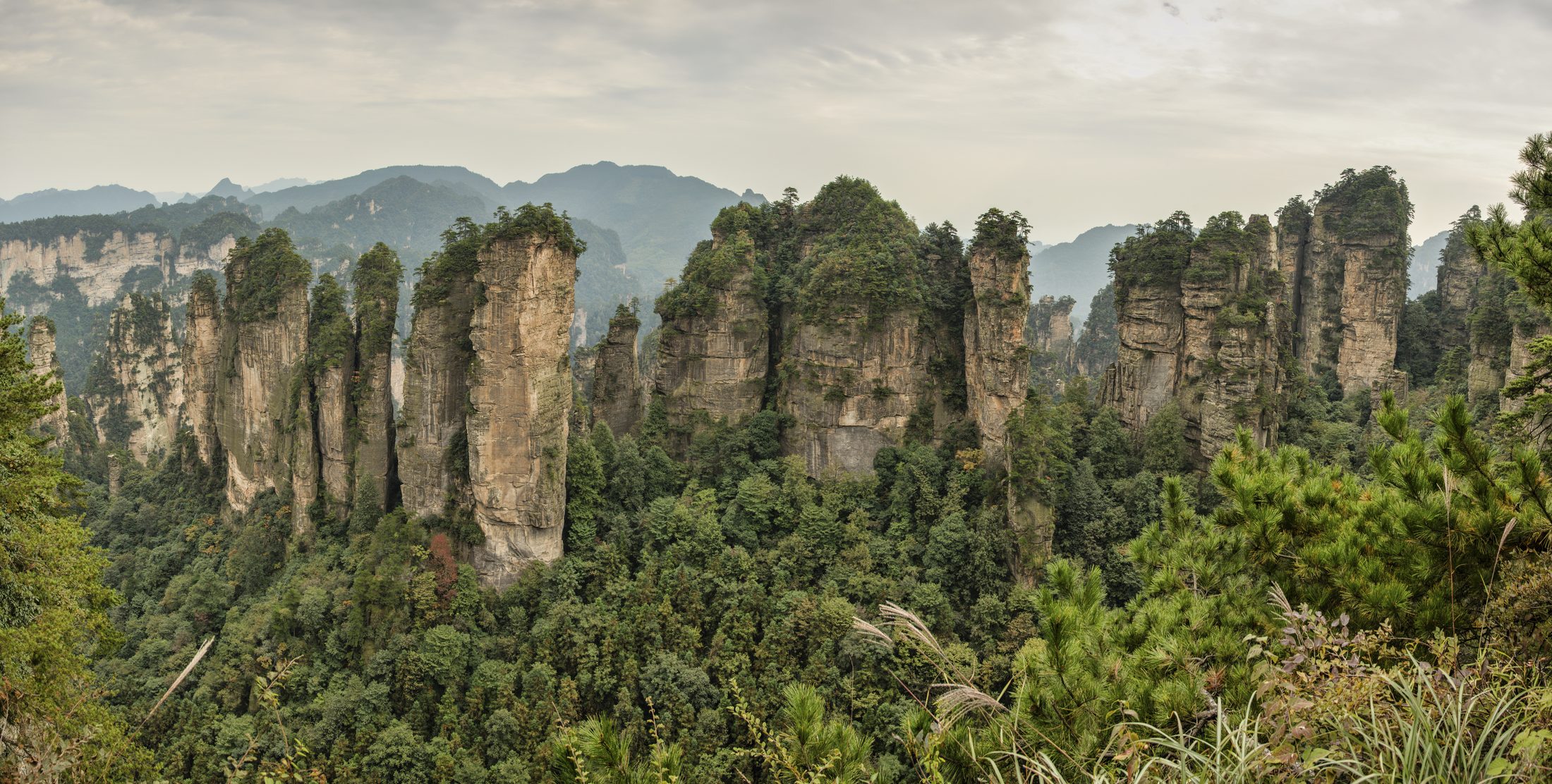
People arrive in Zhangjiajie with a ready-made image in their heads.
Usually it is a pillar.
A vertical stone column, half hidden by cloud, carrying all the burden of a modern fantasy about China: ancient, impossible, cinematic, untouched by ordinary time.
The picture is not false.
It is only incomplete.
Zhangjiajie is not one miraculous viewpoint repeated across souvenir shops and social media feeds. It is a whole mountain system that keeps forcing human beings to accept their proper size again. Elevators shoot up cliff faces. Cable cars float over ravines. Paths descend when you wanted them to climb, then climb when you thought the hard part was over. Fog closes the world in. Sunlight opens it abruptly. The body is never allowed to forget where it is.
This is why Zhangjiajie leaves such a strong afterimage.
The destination does not simply offer scenery.
It rearranges proportion.
Who this is for
This guide is for readers who want a richer answer to questions like these:
- what actually makes Zhangjiajie special beyond the Avatar comparison?
- why does the destination feel more intense, more physical, and more disorienting than a standard scenic stop?
- how do the forest park, Tianmen, streams, village bases, and mountain weather fit together?
- what kind of traveler truly enjoys Zhangjiajie rather than merely admiring its photographs?
If your question is narrower, start with one of these:
In practice
The strongest deeper Zhangjiajie trip usually balances three versions of the destination:
- the stone forest of pillars, precipices, and those impossible vertical planes that make the eye lose its habits
- the mountain floor of streams, paths, shuttle roads, village bases, and the labor required to make such a landscape traversable at all
- the weather theater of cloud, rain, mist, and brief clearings that can transform the same route from disappointment to revelation
If you only chase the most famous viewpoints, Zhangjiajie can feel spectacular but oddly repetitive.
If you only focus on transfers and logistics, you miss the strange emotional pressure that makes the place worth the trouble.
The richer version lets Zhangjiajie feel grand, local, awkward, sublime, and physically honest all at once.
The stone forest in the clouds
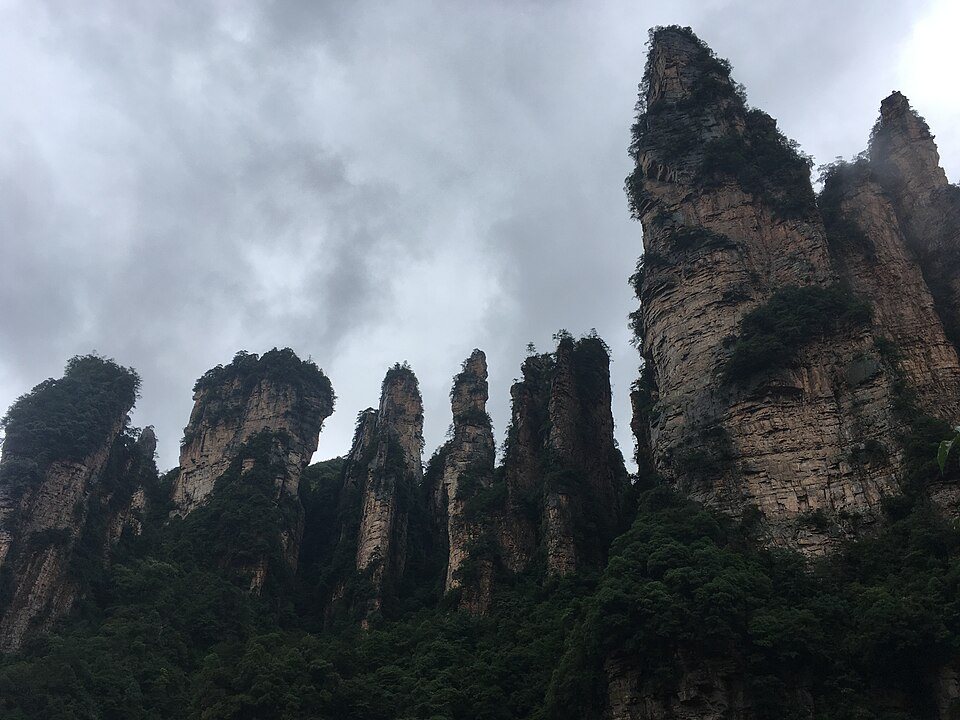
One reason Zhangjiajie remains so persuasive is that it does not look assembled by ordinary geology.
The mountain here rises as fragments, not as one body
This is the first major difference from the mountain imagination many foreign travelers already know.
The Alps build mass. The Rockies build range. Even Guilin’s karst, for all its strangeness, often works through isolated forms in broad river space.
Zhangjiajie does something else.
It builds a crowd of vertical assertions. The stone seems to have broken upward rather than settled into a coherent mountain line. That is why the destination can feel so uncanny. Your eye keeps trying to organize the landscape into a system and keeps failing. There are too many edges, too many rising columns, too many discontinuities between near and far.
The result is not only beauty.
It is instability.
The famous views matter because they feel structurally implausible
Yuanjiajie and Tianzi Mountain are not memorable just because they are photogenic.
They are memorable because they make the world look lightly impossible.
That quality is what the Avatar comparison only partially captures. The film reference explains one kind of visual recognition, but it misses the physical sensation of being there: the way distance collapses in fog, the way a cliff edge can suddenly feel both theatrical and completely unsentimental, the way the mountain keeps refusing to become a picture when you are inside it.
If this core branch still needs practical shaping, Yuanjiajie in Zhangjiajie: Is It Worth It for First-Time Visitors? is the best next read.
Mountains here still set the rules
Some scenic destinations have been so domesticated by infrastructure that the traveler no longer feels the original force of the terrain.
Zhangjiajie has not gone that far.
The route never fully escapes the mountain’s authority
Yes, there are shuttle buses, cable cars, escalators, lifts, maps, ticket gates, and engineered platforms. But even with all of that, the destination keeps reminding you that it belongs first to cliffs, ravines, weather, and height.
This is one reason people leave so tired.
Zhangjiajie is not difficult in the heroic expedition sense. It is difficult in a more modern, more interesting way. It keeps changing the conditions of movement. One branch asks for patience in line. Another asks for downhill confidence. Another asks you to trust a cable car. Another asks whether the fog has erased the very thing you came for.
The mountain keeps the final word.
Human beings here are always slightly provisional
That is what gives the destination dignity.
Even the large-scale tourism machinery cannot fully overpower the feeling that people are visitors negotiating a landscape bigger than the systems built to interpret it. Villages, stations, viewing decks, restaurants, hotels: all of them feel, in some way, inserted into the mountain rather than sovereign over it.
This is not a flaw.
It is Zhangjiajie’s deepest charm.
The mountain floor matters as much as the skyline
A common mistake is to think the destination’s truth exists only at the top.
It does not.
Golden Whip Stream teaches a different scale of attention
Golden Whip Stream matters because it restores the lower register of the landscape.
At stream level, the mountains no longer perform only as icons. They become walls, dampness, shade, overhang, water sound, tree cover, and walking time. The destination gets its body back. Travelers who only chase upper platforms and headline viewpoints often miss this completely. They remember the skyline and forget the habitat.
But Zhangjiajie is powerful precisely because it offers both.
You can spend one hour feeling miniature beneath stone, then another feeling enclosed within forest and water. Those two scales correct each other.
The villages keep the destination from floating into abstraction
Wulingyuan and the surrounding service world matter for the same reason.
They may not be beautiful in the same mythic sense as the mountains, but they stop Zhangjiajie from becoming a hallucination. Hotel fronts, noodle shops, ticket windows, tired travelers, rain ponchos, drivers, local workers, breakfast steam, muddy shoes: these details are not interruptions. They are what make the destination believable.
Zhangjiajie is still a human place because it has not completely erased the labor around the view.
Weather is the real author
There are cities where weather slightly improves or slightly harms the plan.
Zhangjiajie is not one of them.
Fog here is not a problem to be solved. It is part of the text.
First-time visitors often arrive carrying a very rigid visual expectation: they want the clear, clean, postcard version of every famous pillar line.
Sometimes they get it.
Sometimes they get cloud so thick the mountain becomes rumor.
That can feel like bad luck, but it is also one of the deepest truths of the place. Zhangjiajie is a mountain world of concealment as much as revelation. Fog is not only the thing that blocks the view. It is the thing that gives the view its metaphysics. Without cloud, the destination can become too legible. With some cloud, it regains mystery.
Rain and mist slow the body into the right rhythm
This is why people who truly love Zhangjiajie often describe not only what they saw, but how long it took, how the weather changed, and how the mountain kept revising the day.
In a sense, the mountain teaches humility through atmosphere.
The best travelers accept this. They protect one strong scenic priority, allow room for alteration, and stop treating the destination like a clean sequence of guaranteed rewards.
If the weather branch is still making the route feel uncertain, Best Time to Visit Zhangjiajie for First-Time Visitors is the key support page.
Tianmen is the other face of the destination
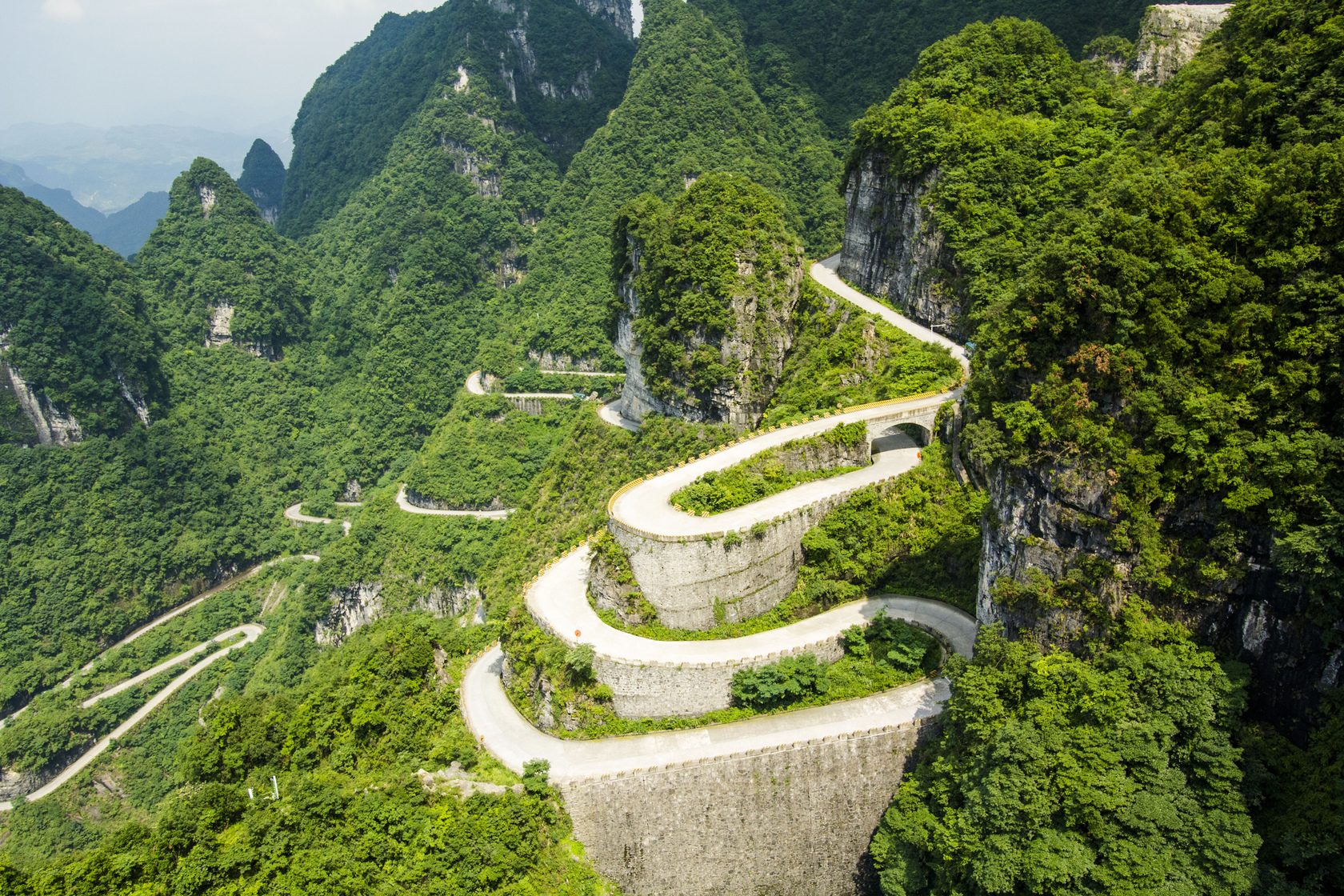
If the forest park is Zhangjiajie’s stone imagination, Tianmen Mountain is its vertical drama made public.
Tianmen feels less ancient, more engineered, and no less intense
This is why the destination works so well as a two-part system.
The forest park gives you dispersed sublimity: pillars, depth, atmospheric layering, long-looking distance.
Tianmen gives you confrontation: cable-car height, road switchbacks, a natural arch staged almost like imperial scenery, and a much clearer sense that human beings have built daring routes into an inhospitable topography rather than simply observing it.
The contrast matters.
Without Tianmen, Zhangjiajie can risk becoming one long study in sandstone distance. Without the forest park, the destination can become too concentrated in its spectacle. Together, they reveal how much of Zhangjiajie’s identity lies in the ongoing negotiation between mountain force and human access.
Infrastructure here is part of the drama, not the enemy of it
Some travelers dislike heavy scenic infrastructure on principle.
In Zhangjiajie, that judgment needs adjusting.
The cable cars, lifts, roads, and platforms are not incidental. They are the contemporary expression of a very old problem: how do human beings live with a landscape this unruly and still move through it? The answer is never entirely graceful. That awkwardness is part of the place.
Zhangjiajie is also a lesson in restraint
This may sound surprising in a destination so visually extreme.
But restraint is exactly what makes a trip here succeed.
Too many named goals make the mountains smaller
This is one of the main first-time mistakes.
Visitors arrive armed with lists: Yuanjiajie, Tianzi, Golden Whip, Bailong, Ten-Mile Gallery, Tianmen, glass bridge, old town, every look-out, every “must-see.” The result is often exhaustion without absorption. They were everywhere and nowhere.
Zhangjiajie nearly always improves when one accepts that not all dramatic terrain needs equal time. The mountains do not reward greed. They reward sequencing.
One good day is better than three panicked ones
Because the destination is physically repetitive in the wrong itinerary and spiritually cumulative in the right one, editing is everything.
Protect a true pillar day.
Protect one contrasting branch.
Protect enough time to be delayed by weather without feeling robbed.
The destination starts to breathe at that point.
A better shape for this version of Zhangjiajie
If you want the destination to feel memorable rather than merely efficient, a stronger shape usually looks like this.
Day 1: arrive small
Use the arrival day to understand scale, not conquer it:
- settle the right base
- walk a little
- look at the mountain from below
- let the destination’s verticality register in the body
This is the day when Zhangjiajie should stop being an image and become a terrain.
Day 2: give the pillars their full dignity
This is the main day.
Let the forest park carry the emotional center of the stop. Do not ask the same day to prove everything. Let it produce depth, not coverage.
Day 3: choose contrast, not repetition
If you have a third day, use it to change the reading of the destination:
- Tianmen for confrontation and engineered drama
- a stream or slower branch for scale correction
- a weather-protected alternative if cloud has already rewritten the plan
The point is not to do more. The point is to see differently.
Practical details that actually improve Zhangjiajie
This kind of feature should still help people travel better.
Base choice changes the emotional version of the trip
Staying in the wrong place can make Zhangjiajie feel more administrative than sublime. The right base can preserve mountain energy, reduce transit friction, and let weather decisions stay flexible. If this question still is open, Best Area to Stay in Zhangjiajie for First-Time Visitors is one of the highest-value pages in the cluster.
The destination punishes overconfidence
Distances, waiting time, and physical drain nearly always look smaller on paper than they feel on the ground. The destination does not need bravery. It needs modesty.
Zhangjiajie usually deserves fewer ambitions, not more days
Two to four days is often enough for a strong first experience.
What weakens the trip is usually not lack of time, but lack of editing. More time only helps if it protects weather, rest, and contrast. Otherwise it can simply produce more mountain names without more mountain feeling.
The real reason people return
People say they go to Zhangjiajie for the views.
That is true.
But many return for something harder to summarize.
They return because the place unsettles ordinary proportion. Because the mountain keeps making human systems look temporary. Because cloud can erase half the world and somehow make it larger. Because paths, lifts, cable cars, and villages all feel secondary to a geology that never agreed to become convenient. Because in Zhangjiajie, for a little while, the human being stops acting like the main scale of things.
That is the destination’s real power.
It does not flatter us.
It resizes us.
FAQ
Is Zhangjiajie only worth visiting for the Avatar-style pillar views?
No. The pillar landscape is the clearest reason many travelers come, but Zhangjiajie becomes more rewarding when visitors also understand the stream valleys, cable-car movement, mountain weather, village bases, and the bodily experience of being inside such a vertical landscape.
Why does Zhangjiajie feel different from other scenic destinations in China?
Zhangjiajie is unusually vertical, segmented, and weather-sensitive. The terrain dictates movement, compresses and expands scale, and makes the traveler feel physically handled by the mountains rather than simply looking at them.
What kind of traveler tends to love this deeper version of Zhangjiajie?
It works especially well for travelers who like dramatic landscapes, walking, fog and light, geological strangeness, and destinations where the route must stay humble before terrain and weather.