Key Takeaways
- The strongest deeper Xishuangbanna stay usually balances one city day, one river-or-temple branch, and enough evening life for the humid south to reveal its actual rhythm.
- Xishuangbanna feels distinctive because it changes not only the scenery but the body's timing: later dinners, slower afternoons, denser air, brighter fruit, and a more porous relation between China and its southern neighbors.
- The city's real interest lies in the tension between tourist fantasy and lived borderland life, where Dai architecture, working markets, scooters, fruit stalls, temple compounds, and migrant commerce all keep the place from becoming a mere set.
- Foreign visitors usually enjoy Xishuangbanna more when they stop asking whether it is 'authentically Southeast Asian' and start reading it as its own humid Chinese border world.
Xishuangbanna does not feel like the rest of Yunnan trying on a tropical costume.
It feels as if the province has simply kept moving south until its lungs changed.
The air thickens first. Then the fruit brightens, the leaves broaden, the shadows shorten, and the day itself begins to drift later. The river becomes less a scenic line than a social horizon. Temple roofs rise in gold and red against a sky that seems to hold heat even after dark. At street level, scooters, skewers, iced drinks, banana leaves, plastic stools, and market bulbs take over from the highland grammar of stone lanes and cold morning light.
If you want the rest of our Xishuangbanna coverage in one place, start with the Xishuangbanna destination hub.
Who this is for
This guide is for readers who want a better answer to questions like these:
- what actually gives Xishuangbanna its own identity beyond the phrase “tropical Yunnan”?
- why does Jinghong feel so much more humid, looser, and border-facing than the rest of the province?
- how do Dai temples, markets, Mekong light, and modern tourism belong to the same place?
- what kind of traveler should give southern Yunnan real time instead of treating it as a novelty detour?
If your question is narrower, the more focused page is usually better:
In practice
The strongest deeper Xishuangbanna trip usually balances three versions of the place:
- the humid Jinghong of river air, scooters, fruit stalls, late dinners, and a city that comes properly into focus after sunset
- the ceremonial and architectural Xishuangbanna of Dai temple compounds, gilded roofs, and a visual language closer to mainland Southeast Asia than to the highland north
- the working borderland of markets, migration, tourism performance, and daily commerce that keeps the prefecture from becoming a mere tropical fantasy
If you only ask whether it is scenic, you flatten it.
If you ask whether it has its own climate of life, it becomes one of the most singular places in China.
The south arrives in the body before it arrives in thought
That is the first truth.
Xishuangbanna changes how you move. Afternoons become heavier. Shade acquires moral value. Iced drinks stop looking optional. Even walking two ordinary blocks in the wrong hour can reorganize your confidence. The place is not difficult in the heroic sense. It is persuasive in the physiological one.
This matters because it turns the city into more than an image. You do not simply see the humid south. You are adjusted by it.
Jinghong belongs to the evening
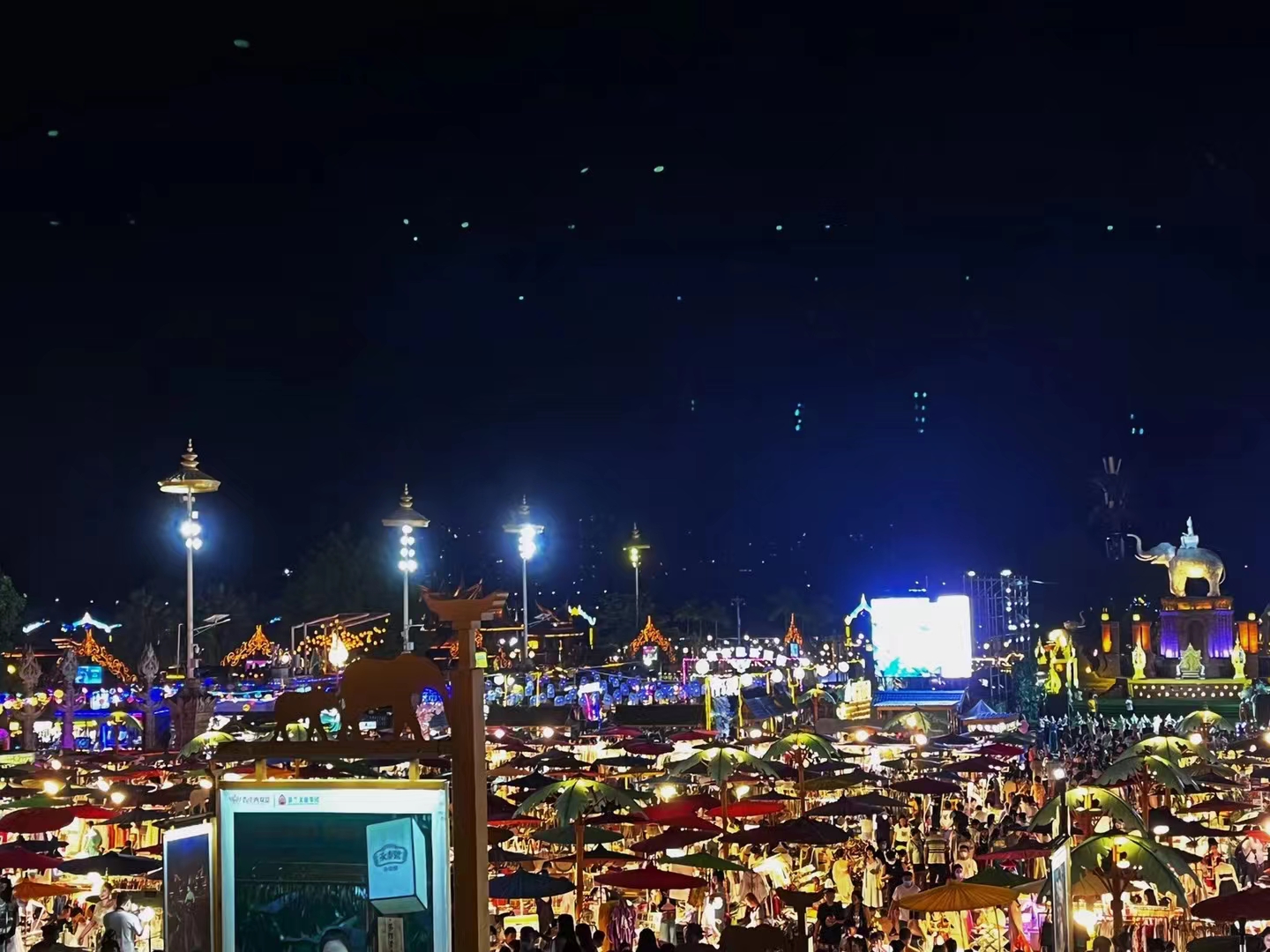
Some cities are best understood in morning light.
Jinghong waits.
When the sun finally loses some force, the place starts speaking more clearly. Markets thicken, the river edge becomes social, families come out, stalls ignite, fruit gleams under bulbs, and the whole city seems to recover its appetite. This is not simply nightlife. It is a different civic timetable shaped by weather and by habit.
That is why rushed daytime verdicts on Xishuangbanna are often wrong. The city has not finished introducing itself yet.
The tropical image is real, but it is not enough
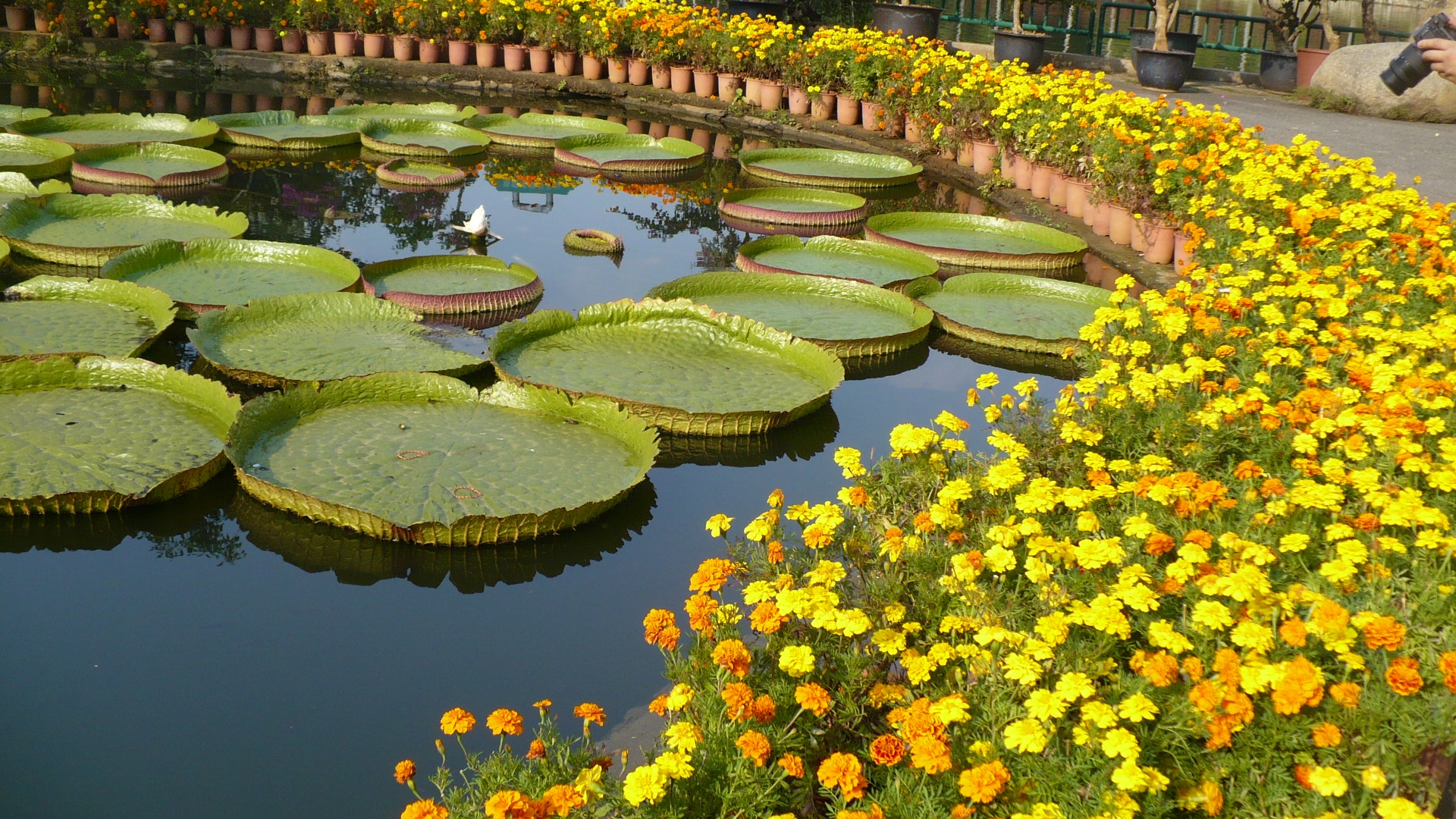
Banana leaves, palms, giant roots, hot light on wet surfaces, flowers oversized enough to look artificial: all of this is real, and yes, it can feel almost implausibly lush by inland Chinese standards.
But Xishuangbanna becomes richer when you stop treating that lushness as the whole story. Tropical abundance here is not a resort backdrop. It belongs to an ecological and cultural zone with its own food habits, house forms, religious textures, and border histories. The vegetation matters because it is part of a different world, not because it flatters the camera.
This is a Chinese borderland, not a borrowed fantasy
The worst reading of Xishuangbanna is also the laziest: that it is simply “China’s version” of somewhere else.
That misses the point.
Yes, the city carries references that many foreign travelers will instinctively connect to Laos or northern Thailand. But resemblance is not identity. Xishuangbanna has its own layering: Chinese administration, Dai cultural presence, domestic tourism, river commerce, migration, performance, aspiration, and the small compromises of a place that is at once deeply local and constantly being interpreted for outsiders.
That friction is what gives it life.
Markets matter because they prevent the city from becoming a set
One reason Xishuangbanna survives heavy tourism better than some tropical destinations is that market logic still runs strongly through it.
Not everything here exists to be admired. Much of it exists to be bought, eaten, carried home, negotiated, washed, resold, or consumed standing up in the heat. Fruit, herbs, grilled meat, sticky rice, cheap plastic goods, temple offerings, cigarettes, tea, baskets, and drinks all circulate through the same city that also sells dreamier versions of itself.
That mixture is healthy. It keeps the place from becoming too smooth.
Why Xishuangbanna fits certain China routes so well
Many first trips to China end up heavier than expected: museums, trains, altitude, planning fatigue, and the constant need to interpret systems.
Xishuangbanna offers relief, but not in the hollow sense of escaping into a sealed resort zone.
It offers another register of life: warmer, later, more edible, more tactile, more market-bound, and less interested in proving historical weight. This is why the prefecture can feel so restorative after Yunnan’s higher and cooler chapters. It does not repeat the province. It turns it inside out.
The deeper reason to come
People say they go to Xishuangbanna for tropical weather, for Dai architecture, for night markets, for “something different.”
Often they are really going for permission.
Permission to slow down because the heat insists. Permission to let evening matter more than morning. Permission to accept that one branch of China can feel radically unlike another without losing its coherence. Permission, finally, to experience a place whose looseness is not laziness but climate made social.
Xishuangbanna is not important because it is exotic.
It is important because it enlarges the map of what China can feel like.
FAQ
Is Xishuangbanna only worth visiting for tropical scenery?
No. The vegetation is part of the appeal, but Xishuangbanna becomes far more interesting once travelers notice its borderland social life, Dai cultural texture, markets, food, and the way the whole day is reorganized by heat and evening.
Why does Xishuangbanna feel so different from the rest of Yunnan?
It is lower, hotter, more humid, and more river-oriented than the highland arc. The cultural references, food cues, architecture, and pace all shift, which makes the prefecture feel like another Yunnan entirely.
What kind of traveler tends to love this deeper version of Xishuangbanna?
It works especially well for travelers who enjoy markets, tropical night air, food culture, temple texture, and cities whose meaning accumulates after sunset rather than through one daytime panorama.