Key Takeaways
- The strongest Xi'an trip usually balances one serious history layer with one food-led old-city layer and one night branch that shows how the city performs its past in the present.
- Xi'an feels different because history here is not distant; it sits under construction sites, beside traffic, behind snack stalls, and above the everyday social life of the old city.
- The city's food culture matters not only because it is delicious, but because ritual, patience, and local codes still shape how ordinary meals are understood.
- Foreign visitors usually enjoy Xi'an more when they let the old city, one heavier museum or Terracotta layer, and one south-side or wall-side evening speak to each other instead of stacking disconnected attractions.
Many travelers arrive in Xi’an expecting to admire history.
What they do not expect is how often history interrupts them back.
It appears not only in the Terracotta Army, not only in museum glass, and not only in guidebook chronology. It appears in the city’s weight. In the wall that still shapes daily movement. In the joke that the next construction site may uncover another forgotten tomb. In the fact that one of China’s most ancient capitals can also feel weirdly contemporary, impatient, loud, and even a little punk.
This is the Xi’an most first-time visitors are not prepared for.
Not dead history.
History that never agreed to stay buried.
Who this is for
This guide is for readers who want a richer answer to questions like these:
- what does Xi’an actually feel like beyond the Terracotta Army and one museum?
- why can the city feel so much heavier, rougher, and stranger than the usual “ancient capital” image suggests?
- how do old-city food rituals, archaeology, and night spectacle fit together?
- what makes Xi’an feel different from Beijing’s imperial clarity or Shanghai’s polished modernity?
If your question is narrower, start with one of these:
In practice
The strongest deeper Xi’an trip usually balances three versions of the city:
- the gravity of walls, towers, gates, and a capital that still feels structurally serious
- the gluten creed of breads, noodles, paomo, and food rituals that still carry local codes
- the subterranean strangeness of archaeology, excavation, performance, and a city forever negotiating with its own past
If you only do the Terracotta Army, Xi’an can feel important but incomplete.
If you only do snack streets and night lighting, you miss the depth that gives those pleasures their force.
The richer version lets the city feel both sacred and unruly.
Why Xi’an feels so heavy
Some cities wear history as decoration.
Xi’an wears it like climate.
This is one reason the city feels harder-edged than many foreign visitors expect. The past is not there to make the city pretty. It is there to shape mood, scale, speech, appetite, and even humor. Xi’an can be blunt because it has been old for too long to perform elegance for strangers.
That bluntness is part of the appeal.
Local character is often described through a phrase like sheng leng ying jue - raw, cool, hard, stubborn. The words can sound severe, but they also point to a city temperament that values directness over polish. Xi’an’s charm is rarely silky. It is built from brick, flour, dust, and time.
The wall is not scenery. It is an instrument
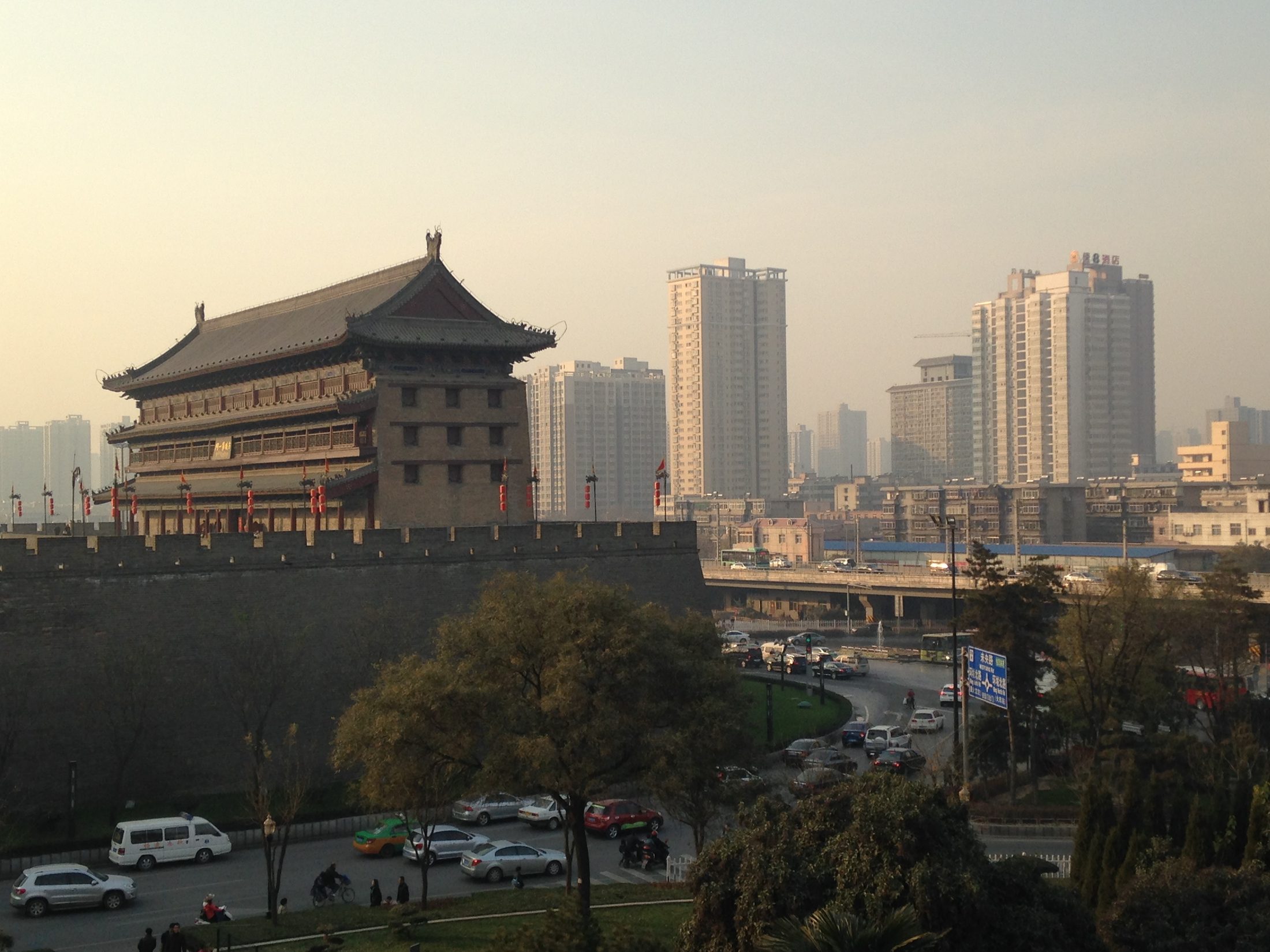
Many travelers treat the Xi’an City Wall as one more old monument.
That is too small a reading.
The wall matters because it still gives the city acoustic and emotional structure. In the morning, it can feel like a chamber for older habits, performance, and local rhythms. At night, its shadow makes the old city feel heavier and more theatrical. The wall is less a barrier than a tuning device. It helps the city hear itself.
Xi’an’s old city still behaves like a real old city
This is not guaranteed in historic destinations.
Xi’an’s older core still carries:
- food routines
- lived neighborhood logic
- walking-scale evening life
- the tension between monumentality and ordinary survival
That is why one dinner, one wall-side walk, or one slower old-city block can reveal more than another checklist museum sprint.
If this is the part of Xi’an you want more of, Is Xi’an City Wall Worth It for First-Time Visitors?, Is Xi’an South Gate Worth Visiting for First-Time Visitors?, and Bell Tower or South Gate at Night: Which Xi’an Old-City Area Fits Better? are strong next reads.
The Gluten Creed: Xi’an’s food is ritual before it is trend
One reason Xi’an feels so complete on a short stay is that food here explains the city quickly.
Not because it is light or easy.
Because it is coded.
Paomo is not just a dish
To outsiders, yangrou paomo can look like a bowl of bread and broth.
To Xi’an, it is a contract.
The ripping of the bread, the patience, the size of the pieces, the message that this sends to the kitchen: all of that matters. The ritual slows the eater down and turns food into participation. This is one of Xi’an’s great gifts to serious travelers. It insists that a meal can still have craft, etiquette, and a hidden conversation between stranger and cook.
That is why Xi’an’s food feels more substantial than pure street-snack tourism. It still contains codes.
Carbohydrates here are civic architecture
Bread, noodles, dumplings, roujiamo, and heavier wheat-based meals do more than fill the stomach. They tell you where the city sits historically: at a northern, inland, Silk Road crossroads where grain, meat, Muslim influence, and durable working appetite all meet.
If food is how you read a place, What to Eat in Xi’an for First-Time Visitors, Muslim Quarter in Xi’an, and Where to Eat in Xi’an for First-Time Visitors belong beside this feature.
The Muslim Quarter is useful, but it is not the whole story
Xi’an’s Muslim Quarter often becomes the symbolic food shortcut for foreign visitors.
It deserves one evening or one controlled block.
But the deeper city is broader than that. Xi’an food feels strongest when one lively snack street is balanced with one calmer old-city meal and one heavier specialty meal that gives the city more internal depth.
This is the difference between visiting Xi’an and actually entering it.
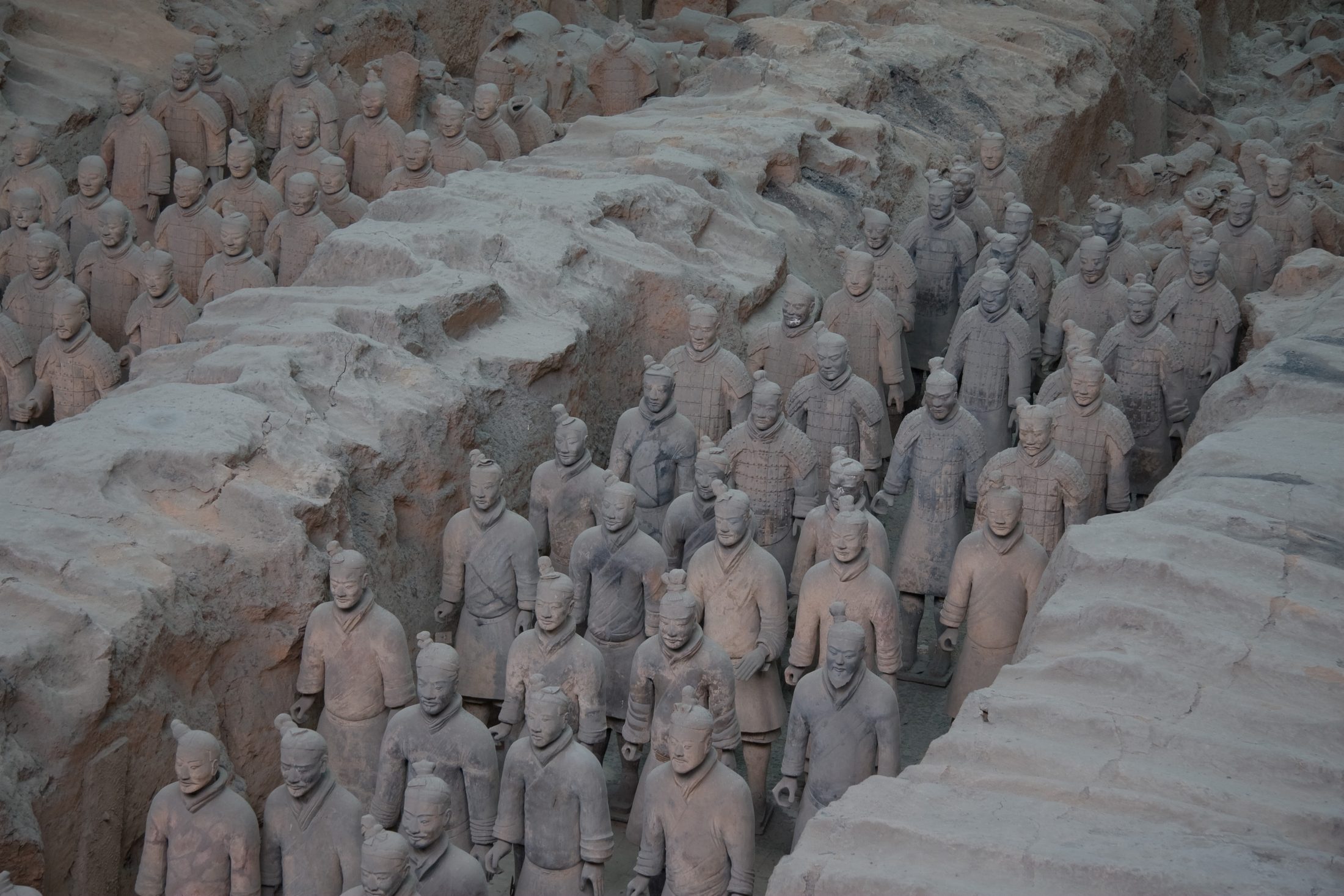
Many historic cities talk about layers.
Xi’an literally builds on them.
Archaeology is part of the city’s modern personality
One of the strangest and most revealing facts about Xi’an is how normal it feels for major construction, transit, or development to coexist with archaeological interruption. You do not need to romanticize this into fantasy. The practical reality is already surreal enough: infrastructure and excavation living beside each other as permanent neighbors.
That creates a special urban mood. In Xi’an, the underground is never truly abstract. It is administrative, physical, bureaucratic, comic, and sacred at the same time.
This is where the city starts to feel almost like science fiction without needing any futuristic visuals.
Xi’an is one of the few cities where “ancient capital” can still feel physically active
In some places, antiquity is safely contained.
In Xi’an, it still affects pacing, route decisions, museum culture, and the city’s own self-awareness. Locals do not need to mythologize the past because it keeps presenting itself. That can produce a very specific dark humor: history is so common here that it becomes part of the urban inconvenience and part of the urban pride at once.
This helps explain why Xi’an often feels less reverential than outsiders imagine. The city is too familiar with history to behave timidly around it.
If you want the more formal institutional layer, Is Shaanxi History Museum Worth It for First-Time Visitors? and Shaanxi History Museum or Xi’an Museum: Which One Fits a First Trip Better? are the practical next pages.
Xi’an’s night culture is strongest when it lets old and new echo off each other
Xi’an at night is not only about eating.
It is about collision.
The old city gives you weight
Wall-side or South Gate evenings work because they let you feel Xi’an’s mass. Dinner, one drink, one walk, one gate tower, one pocket of older urban life: this is the version of the city that feels stern, textured, and grounded.
It is often the best first Xi’an night because it teaches tone before spectacle.
Then there is the other Xi’an, the one that stages Tang fantasy, cosplay, theatrical lighting, public spectacle, and a kind of open-air role-play modernity around Grand Tang Dynasty Everbright City and Tang Paradise.
This is where some foreign visitors misread the city.
They assume this branch is fake because it is flashy.
But it is better understood as one of Xi’an’s most contemporary truths: history here is not only protected. It is performed, gamified, monetized, cosplayed, and emotionally reused by a young generation that wants beauty and fantasy without pretending the past is untouchable.
That is why Xi’an’s Tang-themed night culture can feel more interesting than a simple heritage show. It reveals how Chinese historical imagination now circulates through tourism, self-styling, photography, fandom, and soft civic theater.
If this branch interests you, Grand Tang Dynasty Everbright City in Xi’an: Is It Worth Visiting at Night?, Grand Tang Dynasty Everbright City: When Xi’an’s Flashiest Night Is Worth Planning, and After Dark in Grand Tang Dynasty Everbright City: How to Do Xi’an’s Flashiest Night Without Losing Your Whole Evening are the strongest child pages.
Xi’an feels punk because it does not romanticize its own seriousness
This is one of the city’s best qualities.
Xi’an is a place of emperors, walls, tombs, inscriptions, dynasties, and origin stories. It could easily become pompous.
Instead, it often feels wry.
That wryness appears in:
- loud, unpretentious food culture
- rougher speech rhythms
- a willingness to stage history with neon if necessary
- the casual way the city moves between sacred memory and ordinary hustle
This is why Xi’an can feel more contemporary than some supposedly more modern cities. It has already outlived too many eras to be intimidated by stylistic purity.
The city is stronger when you do not let the Terracotta Army dominate it
Yes, the Terracotta Army matters.
It is one of the world’s great archaeological experiences, and many travelers would rightly regret skipping it.
But Xi’an gets thinner when the trip becomes:
- one Terracotta day
- one rushed Bell Tower photo
- one chaotic Muslim Quarter pass
The better version protects the excursion, then returns to the city and lets Xi’an explain itself through walls, food, museums, and one carefully chosen night.
That is why A Smarter Terracotta Army Day From Xi’an matters so much. It does not only optimize transport. It protects the rest of the city from being flattened by the most famous stop.
Practical details that actually improve Xi’an
Deep writing should still help people travel well.
Xi’an gets better when the old city remains central
For many first-time visitors, hotel choice should respect old-city logic first.
That usually means staying where South Gate, Bell Tower, food, and evening movement still feel coherent. Xi’an is not a city that rewards random hotel geography on a short stay.
If that question is still open, Where to Stay in Xi’an for a Short First Trip and Bell Tower vs South Gate: Where to Stay in Xi’an are higher-value pages than many attraction lists.
This is one of the easiest cities to overschedule
Because Xi’an is so legible on paper, travelers often think they can fit everything:
- Terracotta Army
- wall
- museum
- Muslim Quarter
- pagoda side
- Tang spectacle
- maybe another museum
That is where the city starts to lose power.
Xi’an feels strongest when its heavy things are allowed to be heavy. Protect space around the wall, around the meal, around the excursion, and around one night. The city does not need speed to prove itself.
Solve bookings and transport early
Terracotta Army logistics, museum reservations, and old-city movement all benefit from early clarity. Xi’an is manageable, but it becomes much more elegant once those frictions are solved.
Keep What to Book in Advance for Xi’an, How to Get Around Chinese Cities, and Xi’an Xianyang Airport to City Center close.
A better three-day shape for this version of Xi’an
If you want Xi’an to feel larger than a schoolbook city, this is a stronger shape.
Day 1: Old-city gravity
Build around:
- wall
- one old-city walk
- one food block
- one evening that teaches tone rather than pure spectacle
This is the day when Xi’an becomes physical.
Day 2: The underground empire
Use the Terracotta Army properly, then return without forcing too much more.
Maybe:
- one easier dinner
- one softer old-city continuation
- no attempt to make the night carry another full chapter
This is the day when Xi’an becomes archaeological.
Choose one:
- museum plus calmer dinner
- pagoda side and Everbright night
- a more interesting third day beyond the default checklist
This is the day when Xi’an becomes contemporary again.
Who will love this version of Xi’an
This deeper Xi’an tends to work especially well for travelers who like:
- old cities with actual weight
- food as ritual, not only flavor
- archaeology and the absurdity of living above deep history
- places where civic memory and youth culture still collide in public
- cities that are rougher, stranger, and funnier than their official image suggests
The real force of Xi’an
The real force of Xi’an is not that it preserves the past.
It is that it normalizes it.
Tombs, walls, dynasties, flour, gates, cosplay, excavation, and traffic all belong to the same civic metabolism. That is what makes the city so hard to reduce. Xi’an can feel sacred at noon, hungry at two, ironic by evening, and flamboyantly historical by nightfall without ever losing coherence.
It is not a dead capital.
It is a living capital with a basement full of emperors.
FAQ
Is Xi'an only worth visiting for the Terracotta Army?
No. The Terracotta Army matters, but Xi'an becomes far more rewarding when travelers also make time for the city wall, old-city food culture, museums, and one evening that shows how the city's past still collides with daily life.
Why does Xi'an feel more intense than some other historic cities?
Xi'an carries a thicker sense of historical weight because so much of its identity is still concentrated inside a usable old city, while archaeology, infrastructure, food ritual, and highly theatrical night culture all keep the past present in everyday life.
What kind of traveler tends to love this deeper version of Xi'an?
It works especially well for travelers who like food, urban observation, old-city atmosphere, archaeology, and places where history feels embedded in the ground rather than preserved at a distance.