Key Takeaways
- The strongest deeper Sanya stay usually balances one main bay, one freer public-beach or city-side layer, and one selective activity or shopping branch instead of trying to perform every version of Hainan at once.
- Sanya feels distinctive because leisure here is not accidental. It has been built, choreographed, sold, and repeated until it became one of modern China's most recognizable fantasies.
- The city's real interest lies in the tension between tropical ease and mainland order: wedding photos, airport smoothness, seafood appetite, retirees, duty-free malls, and palms all sharing the same frame.
- Foreign visitors usually enjoy Sanya more when they stop comparing it lazily with Southeast Asia and start reading it as China's own answer to sea-facing comfort.
Sanya is one of the few Chinese cities whose central promise is not history, industry, or velocity, but relief.
People fly south carrying winter in their shoulders. They arrive with pale office skin, airport coffee, duty-free fantasies, swimsuit children, and the exhausted optimism of people who want the country to stop being hard for a few days.
That is the city’s real subject.
Sanya is not merely tropical. It is tropical on purpose. Palms have been planted, coastlines zoned, hotel compounds perfected, wedding-photo crews multiplied, breakfast buffets weaponized, and retail dreams air-conditioned into submission. What sounds artificial in theory becomes, on the ground, one of modern China’s more convincing social inventions: a place built to practice leisure at national scale.
If you want the rest of our Sanya coverage in one place, start with the Sanya destination hub.
Who this is for
This guide is for readers who want a better answer to questions like these:
- what actually gives Sanya character beyond beaches and resorts?
- why does the city feel so specifically Chinese even when the landscape looks globally familiar?
- how do Sanya Bay, Dadonghai, Yalong Bay, and Haitang Bay belong to the same urban story?
- what kind of traveler should treat Sanya as a real destination instead of a policy-driven add-on?
If your question is narrower, these pages may be the better tool:
In practice
The strongest deeper Sanya trip usually balances three versions of the city:
- the ceremonial Sanya of sunrise beaches, wedding crews, drone shots, and the national fantasy of arriving somewhere softer
- the lived Sanya of seafood tanks, coconut stalls, public sand, humid evenings, and a more ordinary coast that still survives beside the compounds
- the commercial Sanya of duty-free appetite, polished hotel worlds, branded leisure, and the infrastructure built to make tropical life feel frictionless
If you only do the sealed-off resort version, Sanya can feel restful but abstract.
If you only look for backpacker looseness, you will misunderstand the city entirely.
The real Sanya lies in how carefully ease has been assembled.
A coastline designed to calm people down
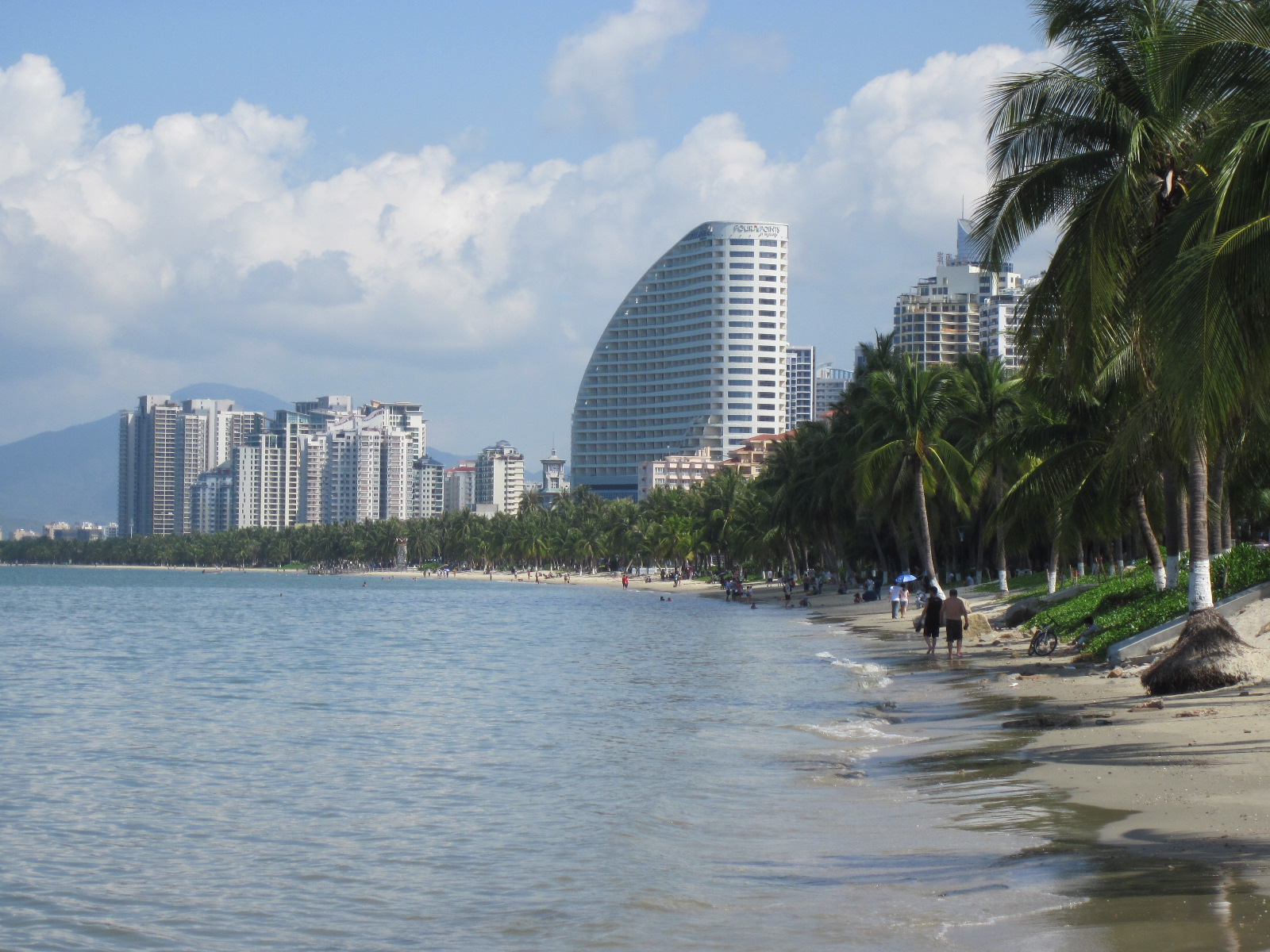
Many tropical destinations sell escape.
Sanya sells decompression.
That is a more precise promise. The city is not built for improvisation first. It is built for recovery: from winter, from office life, from inland fatigue, from urban overuse. Long boulevards, hotel lobbies, bay-side promenades, family breakfasts, shuttle logic, late checkouts, golf carts, and sea-view rooms all belong to the same system.
This is why Sanya can feel oddly persuasive even to skeptical travelers. It does not pretend to be wild. It tries to make comfort legible.
The coast is not one city, but several moods sharing a shoreline
One reason Sanya reads poorly in lazy travel shorthand is that it gets flattened into one generic beach label.
In reality, the south coast is a sequence of different social worlds.
Sanya Bay is broad, public, and slightly theatrical, full of the long urban beachfront that lets the city show itself off. Dadonghai is denser, more immediate, more lived, and often more legible on foot. Yalong Bay refines the classic resort formula. Haitang Bay pushes toward a more sealed, upscale, compound-driven version of luxury and consumption.
Those differences matter because they change what kind of Sanya you actually wake up inside.
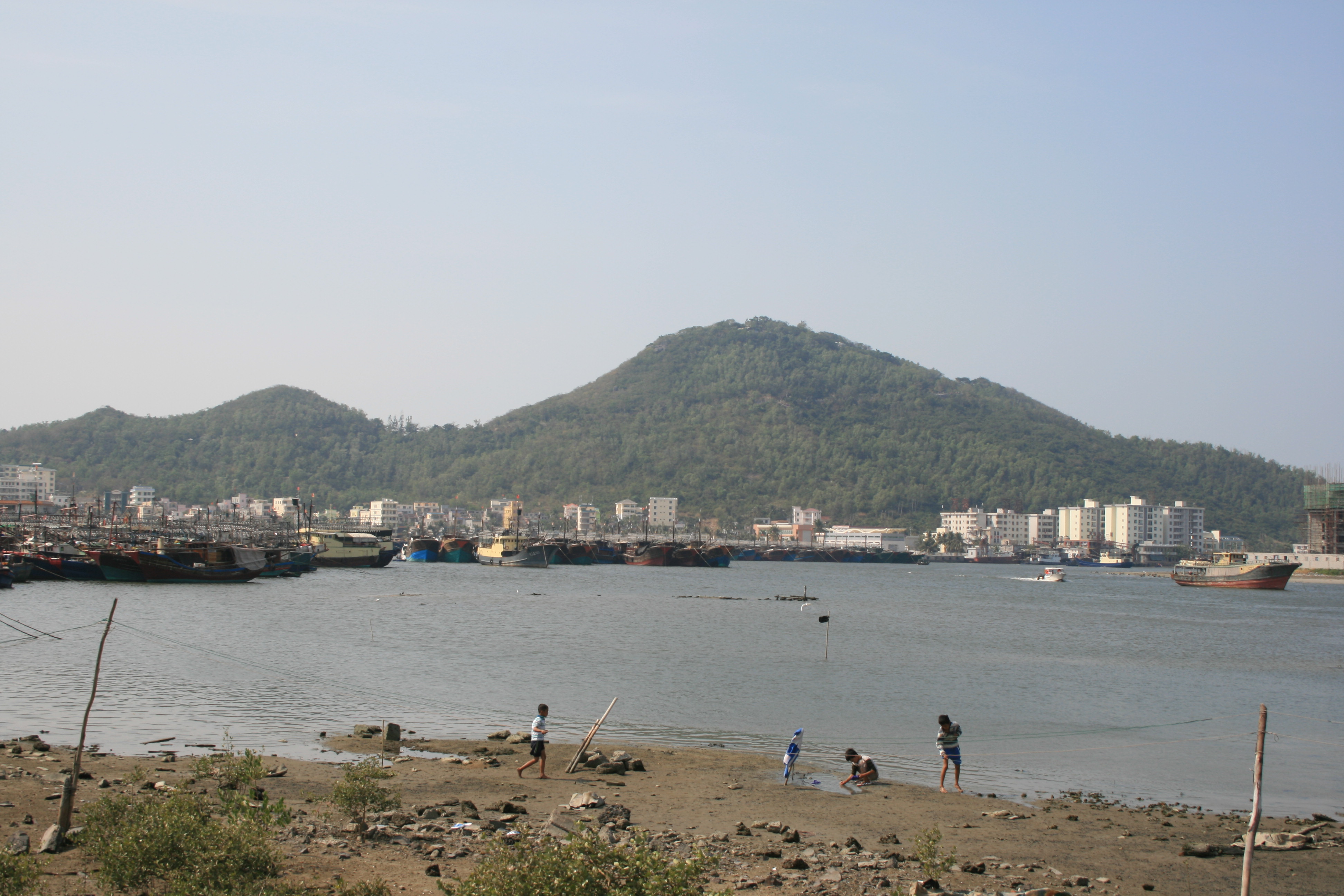
At Dadonghai especially, the city’s surface softens. You notice that Sanya is not only a hospitality machine. It is also a place of swimmers, local errands, older apartment blocks, simple seafood dinners, and the very mainland habit of bringing family life directly to the waterfront.
China did not stumble into leisure here. It engineered it.
This is the part foreign visitors often miss.
Sanya makes most sense when read not as a failed substitute for Bali or Phuket, but as a highly revealing Chinese original. It shows what happens when a country with immense domestic demand decides that beach life, climate relief, branded service, and aspirational consumption should all be available at home.
That is why the city is full of particular rituals: wedding photographers commanding the sand at golden hour, retirees escaping the north, parents treating the resort breakfast like a tactical sport, airport arrivals that hand off cleanly into a hotel economy designed to minimize friction, and duty-free malls that turn tropical weather into a luxury-shopping argument.
Nothing about that is accidental. Sanya is one of the clearest places in China to watch leisure become infrastructure.
The sea still wins when the city stops trying so hard
And yet, for all the management, the city is saved by water.
Light over the South China Sea still does what it always has. Humidity changes the day. Sudden rain interrupts the polished script. Salt stays on the skin longer than the sales pitch. A public stretch of sand can still feel more truthful than a much more expensive terrace.
That is when Sanya becomes less interesting as a product and more interesting as a city. You begin to see the gap between the designed tropical fantasy and the ordinary people learning how to use it well.
Why Sanya works in a China route
Sanya is rarely the place to understand China first.
It is one of the best places to stop letting China press on you for a moment.
That difference matters. In a city-heavy route, Sanya can reset the body’s patience. After Beijing stone, Shanghai scale, or Guangzhou humidity of another kind, the city offers a different logic: fewer monuments, more horizon; less interpretation, more weather; less proving, more drifting.
That is why Sanya often succeeds not by being the most intellectually forceful stop, but by being the one that restores proportion.
The deeper reason to come
People travel to Sanya thinking they are coming for the beach.
Often they are really coming to see how a rising middle-class country imagines rest.
That is a subtler, stranger, and in the end more revealing subject than palm trees alone.
FAQ
Is Sanya only worth visiting for resorts and beaches?
No. Those are the obvious reasons, but Sanya becomes more interesting once travelers notice how beach districts, wedding photography, retail desire, winter migration, and public-sea rituals all help define the city's culture.
Why does Sanya feel different from other tropical destinations in Asia?
Sanya is less bohemian and less improvised. It feels built around mainland Chinese ideas of recovery, comfort, family leisure, polished service, and a tropical fantasy that is carefully managed rather than left loose.
What kind of traveler tends to love this deeper version of Sanya?
It works especially well for travelers who enjoy sea air and hotel ease, but also want to read how contemporary Chinese leisure, consumption, and climate escape actually look on the ground.