Key Takeaways
- The strongest deeper Lijiang stay usually balances one old-town day, one mountain-facing branch, and enough unstructured time for the city's water, light, and altitude to work gradually rather than theatrically.
- Lijiang feels distinctive because it is both seduction and threshold: a place that welcomes the traveler with ease while quietly preparing the body and mind for a harder plateau beyond.
- The city's real interest lies in the tension between ancient-looking surfaces and an economy almost entirely organized around being looked at, inhabited, rented, photographed, and performed.
- Foreign visitors usually enjoy Lijiang more when they stop arguing about whether it is 'too touristy' and start reading what kind of tourism, longing, and mountain imagination the city actually contains.
Lijiang is one of those cities people love to dismiss just before they are won over by it.
Too famous, they say. Too polished. Too many guesthouses, too many photo sessions, too much wood-and-water prettiness arranged for purchase.
All of this is true, and none of it is enough.
Because Lijiang’s real power lies elsewhere. It lies in how the city receives you: with sunlight on stone, cold in the shade, water moving under narrow bridges, roofs folding over each other like scales, and a snow mountain hanging in the background with such indifference that every human performance below it starts to look faintly temporary. The old town may charm you first. The plateau keeps you honest afterward.
If you want the rest of our Lijiang coverage in one place, start with the Lijiang destination hub.
Who this is for
This guide is for readers who want a better answer to questions like these:
- what actually gives Lijiang its hold beyond its postcard old town?
- why does the city feel softer than Shangri-La and still more charged than an ordinary heritage stop?
- how do guesthouse courtyards, Naxi traces, Jade Dragon Snow Mountain, and route logic belong to the same story?
- what kind of traveler should treat Lijiang as a real destination instead of only a scenic staging point?
If your question is narrower, these pages may be the better tool:
In practice
The strongest deeper Lijiang trip usually balances three versions of the city:
- the old-town Lijiang of canals, stone lanes, guesthouse courtyards, tea, woodwork, and the very human desire to wander somewhere already made beautiful
- the threshold Lijiang of oxygen, thinner air, mountain weather, bus departures, train schedules, and bodies quietly adjusting before they go higher
- the staged Lijiang of costumes, cameras, rooftop bars, souvenir performance, and the strange honesty of a city that no longer hides how much of its livelihood depends on being loved
If you only judge the place by whether it is touristy, you flatten it into an argument.
If you let the city work on you as atmosphere, threshold, and economy all at once, it becomes much harder to forget.
A town built to be looked at, but not only that
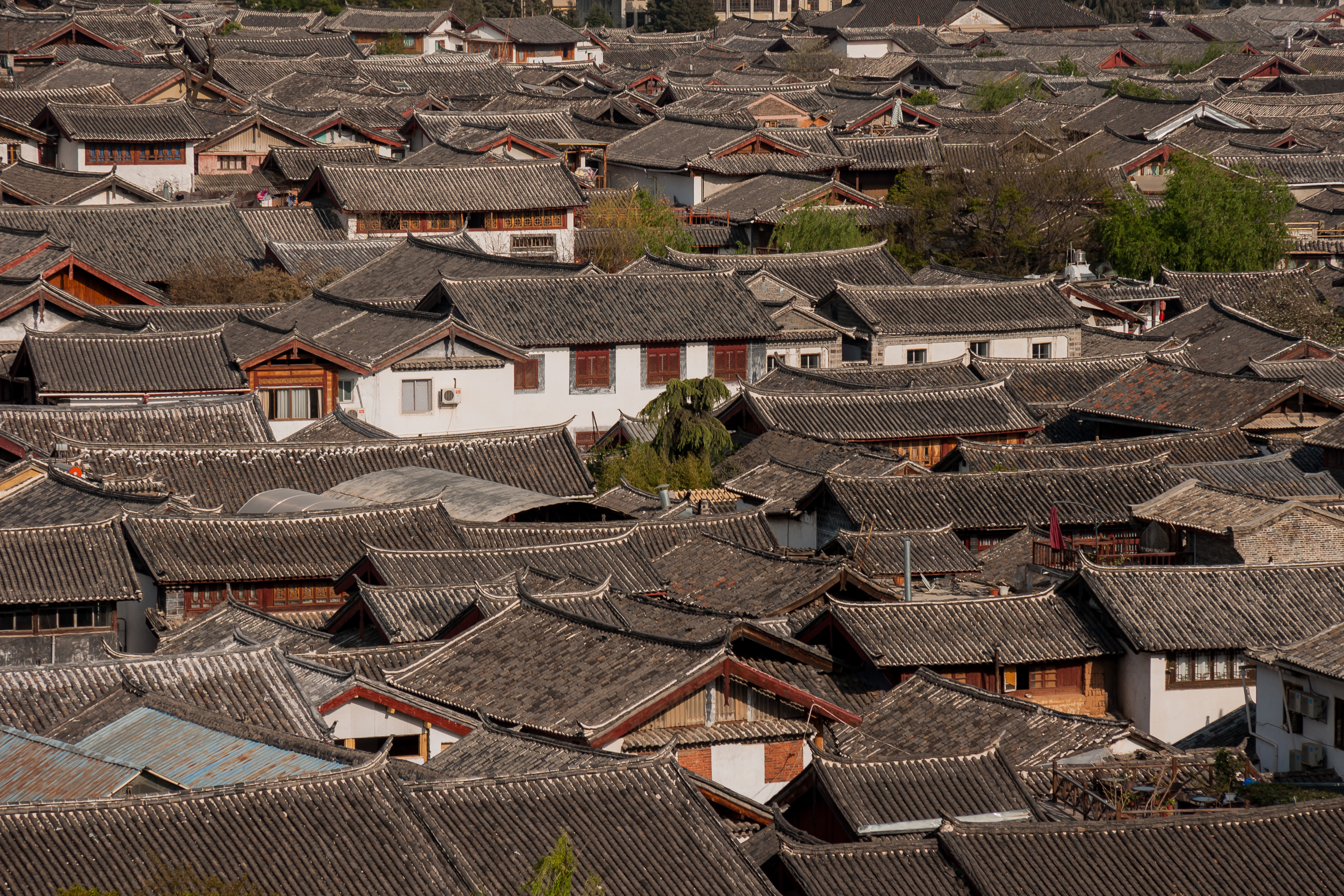
Lijiang knows it is beautiful. That self-knowledge is part of the place.
The town does not pretend to have escaped the camera. Streets open into careful views. Canals catch light exactly where people pause. Wooden balconies tilt toward the lane like faces leaning into conversation. Inns, courtyards, and cafes understand perfectly what sort of longing the traveler brought with them.
Some people resent that. They want authenticity to arrive in rougher clothing.
But Lijiang is more interesting when you stop asking whether the beauty has been commercialized and start asking what sort of beauty can survive commercialization without becoming dead. The answer, here, is: beauty anchored by mountain weather, by altitude, by water, and by a civic layout still capable of producing quiet even when the market is very much alive.
The old town is not the whole city. It is the city’s mask and instrument.
This matters.
Lijiang’s old town is the face the world already knows, but the city underneath it is less ornamental and more strategic. People arrive here not only to admire lanes and lanterns but to gather themselves. They sleep earlier than expected. They notice the air. They negotiate train plans, day trips, medicines, layers, and the first subtle rearrangement of appetite that comes with elevation.
This is why Lijiang often works better than its critics admit. It performs pleasure while quietly doing harder work. It eases the traveler into another Yunnan.
Jade Dragon is the mountain sentence hanging over everything
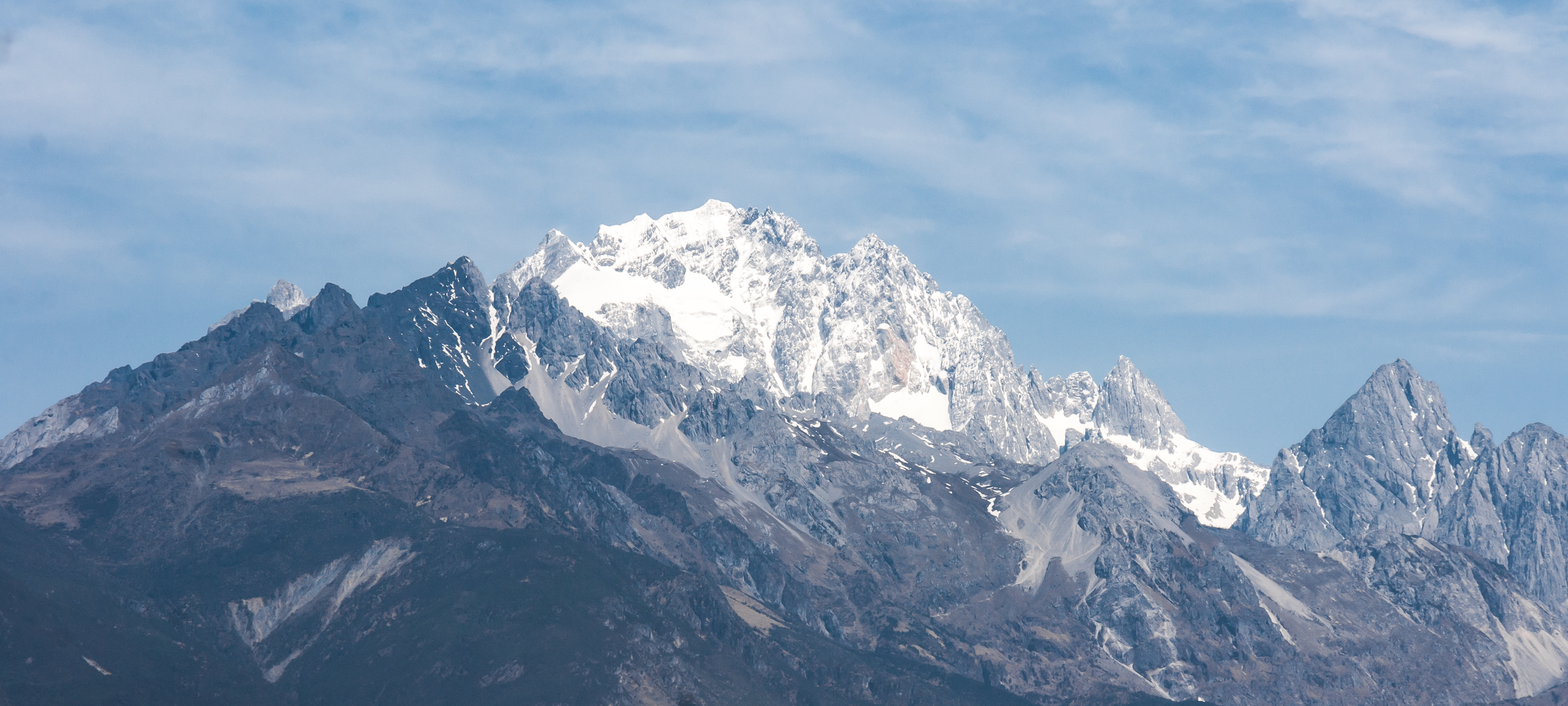
Cities elsewhere can hide their horizon.
Lijiang cannot.
Jade Dragon Snow Mountain does not always dominate the day in the literal sense, but it governs the imagination. It is the white, cold clause hanging behind the town’s softer grammar. You can drink coffee in a courtyard, listen to water against stone, browse embroidery, or watch tourists renting elaborate dress, and still the mountain remains there, reminding everyone that prettiness is not the whole story. Beyond the guesthouse is the plateau; beyond the old town is height.
This is what saves Lijiang from becoming merely decorative. The city is never allowed to float free of geology.
Tourism here is not a flaw to hide. It is the local weather.
One of the most tiring habits in contemporary travel writing is the need to sort every famous place into pure and impure.
Lijiang resists that sorting.
The city is deeply visited, heavily photographed, thoroughly monetized, and still capable of grace. It sells itself and yet continues to create real mornings, real shadows, real cold, real stillness after rain, and real fatigue in the legs when you have wandered too long over stone at altitude.
That contradiction is not a defect in the city’s character. It is its character.
Travelers dressed for one evening’s fantasy, shop signs in many scripts, musicians playing for passing crowds, courtyard breakfasts planned down to the plate, and local life threading through all of this in fragments rather than in a single pure continuity: Lijiang contains these things without resolving them. The town is both performance and habitat.
Why Lijiang is such a good opening move
For many first-time Yunnan routes, Lijiang works because it offers the body a compromise.
You are already somewhere different: colder light, stronger sun, thinner air, mountain edges, different food rhythm, different architecture, different sky.
And yet the city still receives you gently. Beds are easy to find. Streets invite wandering. Food is accessible. Beauty comes without too much physical demand. You can feel that you have arrived somewhere with another elevation of life without being tested by it immediately.
That is a rare travel gift. Not every threshold city knows how to do it.
The real charm is in the tempo
Lijiang’s finest quality may be tempo rather than monument.
The best hours here are often modest:
- waking up cold and opening a wooden window
- hearing water before traffic
- letting breakfast take longer than it should
- watching sunlight move down roof tiles
- crossing from busy lane into a quieter one and finding the town suddenly less public
These are not spectacular events. They are the things that persuade you to stay one night longer.
A stronger shape for this version of Lijiang
If you want the city to feel fuller than a heritage set-piece, a better shape usually looks like this.
Day 1: arrive and let the basin do the work
Use the first day to settle:
- walk enough to understand texture, not enough to exhaust the body
- notice how the town sits under the mountain
- let the altitude announce itself in small ways
- do not turn the arrival into a conquest
This is the day when Lijiang should stop being an image and become a climate.
Day 2: choose whether the city or the mountain is leading
On the second day, decide honestly:
- do you want Lijiang as atmosphere and old-town life?
- or do you want to bring the mountain branch closer?
Weak versions of Lijiang happen when travelers try to force both into the same nervous schedule. Stronger versions let one side speak more clearly.
Day 3: move on, or stay because the city actually earned it
If the route continues to Shangri-La or the gorge, move with intention.
If it does not, stay because the city really deserves another morning, not because you ran out of ideas.
Lijiang is a better destination when it is allowed to be enough.
Practical details that actually improve Lijiang
This kind of feature should still help people travel better.
Lijiang is often better as an opening than as a frantic side trip
The city makes the most sense when it has at least one real night and one usable daylight period. Too many travelers arrive, photograph, and depart before the town has had time to change scale.
Altitude is gentle here only if you respect it early
Lijiang is not Shangri-La, but that does not mean the body notices nothing. Sleep, hydration, pacing, and not trying to dominate the arrival day still matter.
The city improves when you stop trying to prove you found the untouristy version
This is a useless ambition in Lijiang. Better to ask whether you found your rhythm inside a famous place and whether the place still gave you something true.
The deeper reason to come
People say they go to Lijiang for beauty.
Often they are really going for acclimatization of a more mysterious kind.
Not only acclimatization to altitude, but to another way of entering landscape: more slowly, more seductively, with more water, more wood, more market life, and more ambiguity than the harsher plateau beyond will offer. Lijiang does not force the highlands on you. It introduces them with manners.
That is why the city stays with people.
It is not only pretty.
It is persuasive.
FAQ
Is Lijiang only worth visiting for the old town?
No. The old town is the obvious entry point, but Lijiang becomes more interesting once travelers notice the mountain basin, the thin air, the guesthouse economy, Naxi traces, and the way the city acts as Yunnan's elegant threshold rather than only its prettiest postcard.
Why does Lijiang feel different from other famous heritage towns in China?
Lijiang carries plateau light, mountain pressure, and a stronger sense of route transition. It is not only a preserved townscape; it is also a staging ground for people moving toward higher, colder, and more remote parts of Yunnan.
What kind of traveler tends to love this deeper version of Lijiang?
It works especially well for travelers who enjoy beauty with some ambiguity: old-town wandering, guesthouse mornings, snow-mountain weather, and destinations where tourism itself becomes part of the place's atmosphere.