Key Takeaways
- The strongest deeper Kunming stay usually balances one park-and-street day, one market-or-food rhythm, and enough slack for the city's mild climate and civic ease to do their understated work.
- Kunming feels distinctive because it does not plead for attention. Its real power lies in atmosphere: spring-like weather, broad avenues, flowers treated as daily matter, and a city that remains unusually courteous to tired arrivals.
- The city's real interest lies in the tension between capital function and emotional softness, where transport, bureaucracy, universities, parks, and food culture add up to a place far gentler than most provincial capitals allow themselves to be.
- Foreign visitors usually enjoy Kunming more when they stop asking it for a single iconic blow and start noticing how elegantly it makes the rest of Yunnan possible.
Kunming has the unusual dignity of a city that does not need to insist.
It does not seduce with one skyline, one old quarter, or one monument everyone must photograph before breakfast. Its gifts are distributed more democratically than that: in the weather, in the produce, in the way a park belongs to ordinary life instead of existing as a ceremonial space, in the fact that a provincial capital can still feel as if it remembers the body has limits.
If you want the rest of our Kunming coverage in one place, start with the Kunming destination hub.
Who this is for
This guide is for readers who want a better answer to questions like these:
- what actually gives Kunming value beyond being the airport city before somewhere prettier?
- why do some Yunnan routes begin to feel more coherent after a day here?
- how do Green Lake, flower markets, Dianchi, food life, and the city’s mildness belong to the same story?
- what kind of traveler should let Kunming be a chapter instead of merely a hinge?
If your question is narrower, these pages may be the better tool:
In practice
The strongest deeper Kunming trip usually balances three versions of the city:
- the park-city Kunming of Green Lake, old people dancing, students on benches, birds in cages, winter sun, and a civic life still willing to happen outdoors
- the practical Kunming of airports, trains, bus links, flower markets, markets of every other kind, and the deeply useful competence of a provincial capital that moves people without punishing them
- the emotional Kunming of decompression, where travelers arrive slightly frayed and discover that Yunnan can begin not with a gasp but with a steadying breath
If you only ask what the city is famous for, you may underrate it.
If you ask how well a city receives the stranger, Kunming starts to look unusually wise.
A capital with spring in its manners
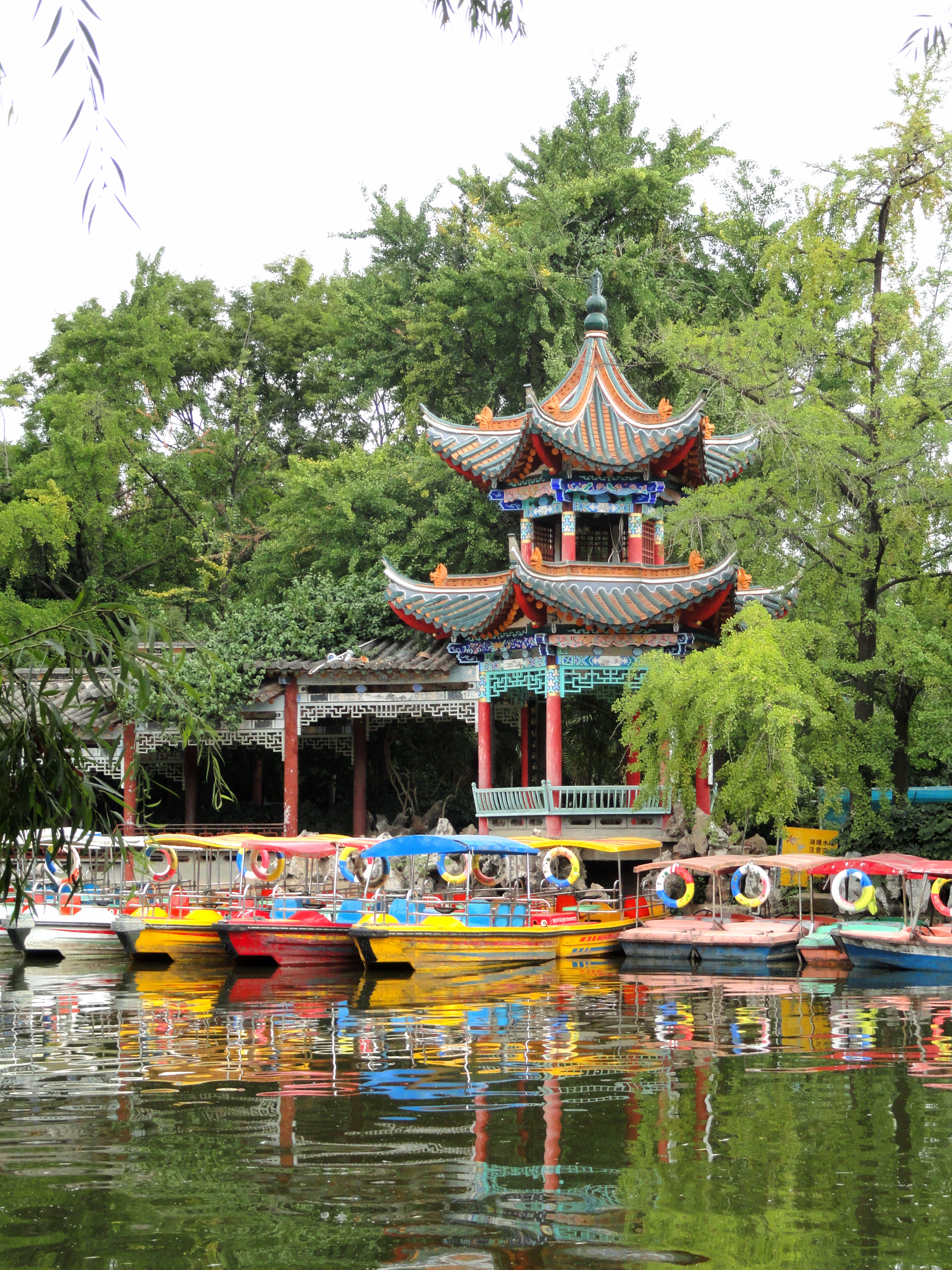
There are cities whose climates alter their ethics.
Kunming is one of them.
The mildness here is not simply meteorological. It enters behavior. People stay outside longer. Parks remain central to the day. Flowers are not treated as luxury punctuation but as a normal part of commerce and appetite. The city does not seem perpetually braced against weather, and that creates a different urban temperament from the one most travelers meet first in China.
It is hard to overstate how relieving that can feel.
Green Lake explains the city better than any official slogan
Green Lake is not extraordinary because it is grand. It is extraordinary because it is used correctly.
Kunming gathers there without embarrassment. Retirees, students, courting couples, amateur singers, people on errands, people with nowhere in particular to be, and travelers still learning how tired they are after arrival all pass through the same civic space without the need to stylize themselves.
That is a better clue to the city than any skyline. Kunming remains one of those places where public life is still allowed to be ordinary, and ordinary here is often beautiful enough.
This is a place where blooms are infrastructure.
The title “city of eternal spring” can sound like tourism copy until you begin noticing how deeply flower culture enters commerce, gifting, markets, sidewalks, and the visual grammar of the city itself. In Kunming, color is not reserved for festivals. It belongs to the week.
That matters, because it gives the city a domestic richness. Kunming does not feel beautiful only when staged for the visitor. It feels beautiful because beauty still circulates through everyday transactions.
Dianchi and the western edge stretch the city outward
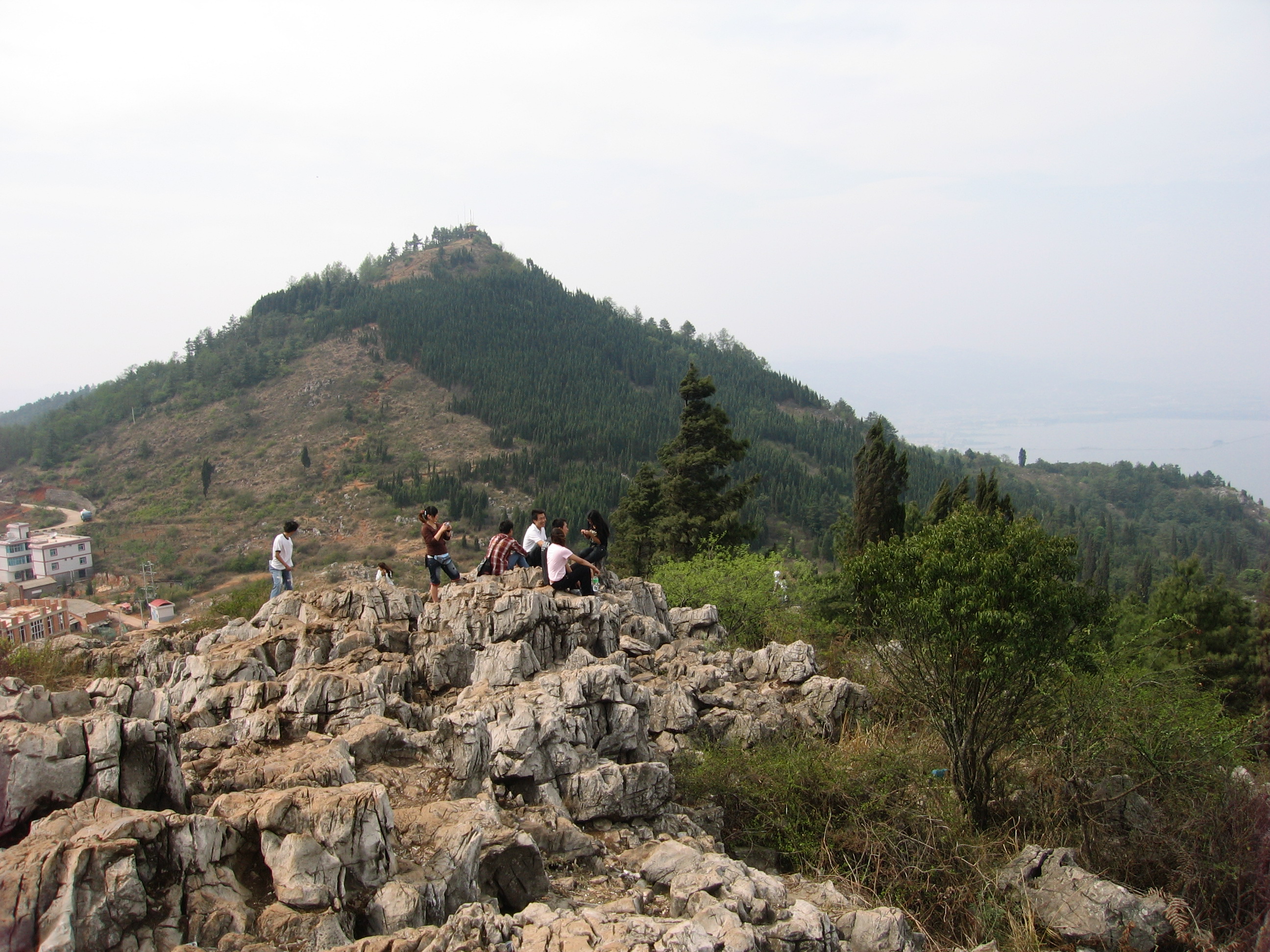
Kunming’s other strength is that it can widen.
Once you move toward Dianchi or the western hills, the city stops behaving like a capital in the narrow bureaucratic sense and becomes something larger in mood: a basin settlement, a threshold, a place where the province is already beginning to show its dimensions.
This is why Kunming can be so clarifying. It prepares the eye and the pace before the route asks for harder scenery. It teaches you how to read Yunnan with lower stakes.
The city knows how to begin things
Some destinations are endings. Some are crescendos.
Kunming is an opening chord.
It knows how to make people ready: ready for Dali’s width, ready for Lijiang’s seduction, ready for Shangri-La’s thin light, ready even for the possibility that the trip should remain softer than the original plan imagined. This capacity to ready the traveler, rather than merely impress them, is rarer than tourism discourse admits.
Kunming rewards people who understand understatement
Not every traveler does.
Some need a city to strike hard and immediately. Kunming does not work that way. It reveals itself through repetition: another stretch of winter sun, another plate of mushrooms, another easy walk, another glimpse of how gently the city lets the day unfold.
That does not make it minor. It makes it literate in a different scale of pleasure.
Why Kunming fits first-time China routes so well
Many first trips to China begin under logistical stress: immigration, payment anxiety, transit uncertainty, air quality fears, hotel check-in fatigue, and the ordinary disorientation of scale.
Kunming softens all this without turning the trip into retreat.
It is still recognizably a Chinese provincial capital. It still has traffic, business, density, and ambition. But the city holds these in a milder key, and that makes it a remarkably good teacher for the rest of the province.
The deeper reason to come
People say they go to Kunming because that is where the Yunnan route starts.
Often they are really going because they need to arrive somewhere that still believes in ease.
Not ease as luxury, but ease as urban decency: weather that does not bully, food that does not posture, parks that do not over-curate, and a city that understands a traveler may need one clear day to become receptive before beauty starts making demands.
Kunming’s greatness is modest.
That is precisely why it matters.
FAQ
Is Kunming only useful as a transit city?
No. Kunming can certainly function as a transport hinge, but it becomes more interesting once travelers notice its climate, parks, flower economy, food life, and the composed urban rhythm that makes it one of China's easiest provincial capitals to inhabit.
Why does Kunming feel different from other big inland Chinese cities?
Kunming is milder in weather, calmer in demeanor, and less eager to overwhelm. It carries the practicality of a capital without the usual hardness, which gives the city a rare generosity toward arrival.
What kind of traveler tends to love this deeper version of Kunming?
It works especially well for travelers who like civic texture over monumentality: good produce, park culture, easy mornings, walkable districts, and cities that make you feel steadier instead of more stimulated.