Key Takeaways
- The strongest Chongqing trip usually balances iconic vertical-city stops with one heavier industrial or bunker layer and one genuinely food-led evening.
- Chongqing's famous visual weirdness makes more sense once travelers read it as a city shaped by mountain terrain, wartime adaptation, river trade, and working-city pragmatism.
- The city feels richest when cyberpunk spectacle, bomb-shelter afterlives, and ordinary street stamina are understood as parts of the same urban story.
- Foreign visitors usually enjoy Chongqing more when they protect pacing, district logic, and evening energy instead of treating the city like an all-day photo chase.
Many foreign travelers meet Chongqing first through the internet.
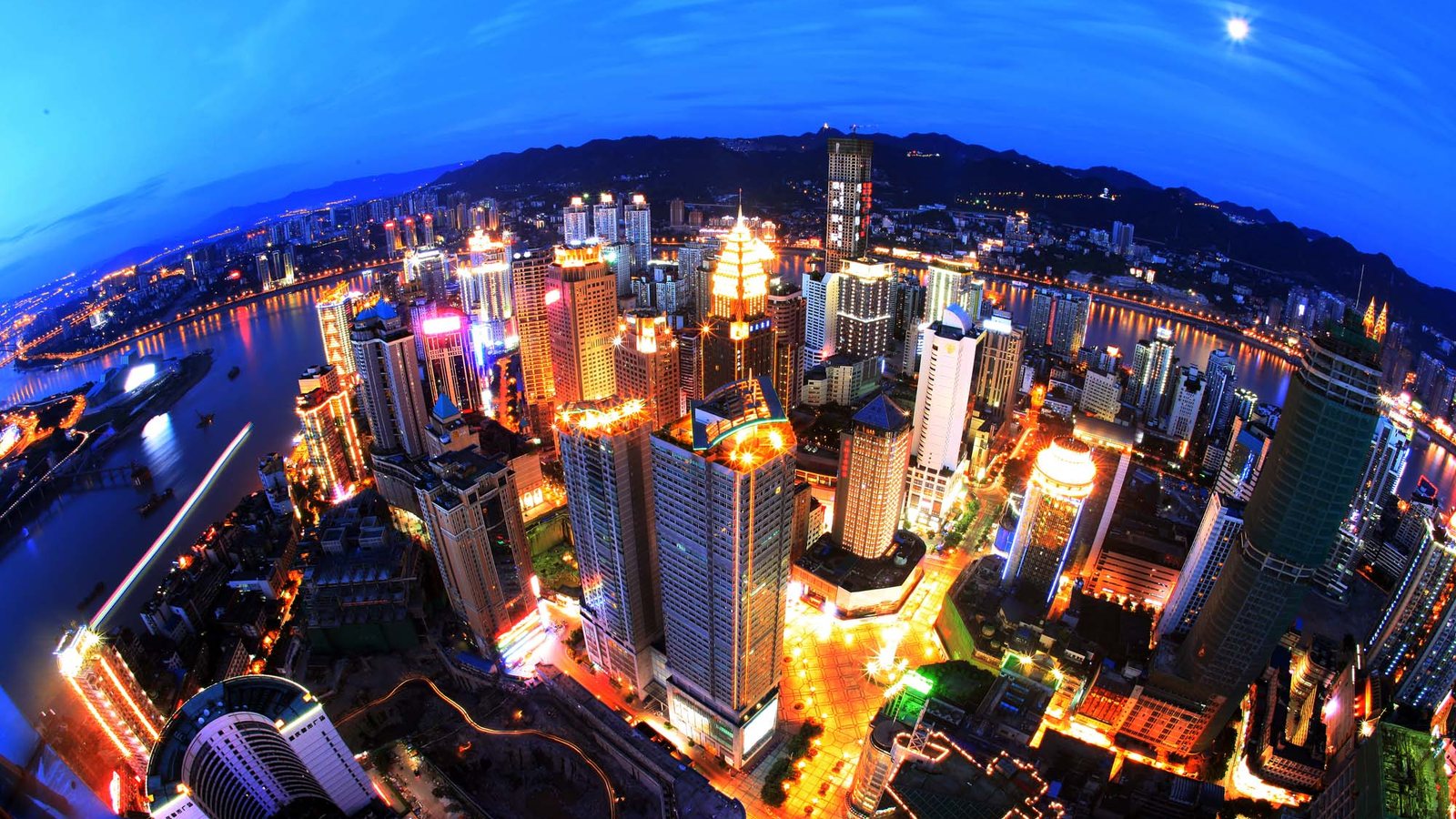
A train entering a building. A plaza that is also a roof. A skyline that looks less like urban planning than like a sci-fi rendering someone forgot to simplify.
That is an understandable entry point.
It is also not enough.
The real force of Chongqing is not that it looks cyberpunk. It is that underneath the visual shock sits a city of mountain pressure, wartime improvisation, dockside labor, bunker afterlives, chili heat, and a kind of rough mutual intelligence that many Chinese speakers still describe through the old word jianghu.
That is the Chongqing worth writing about.
Not just the city that breaks your map.
The city that teaches you why it had to become this way in the first place.
If you want the rest of our Chongqing coverage in one place, start with the Chongqing destination hub.
Who this is for
This guide is for readers who want a richer answer to questions like these:
- why does Chongqing feel so overwhelming, even to experienced city travelers?
- what is the city really about beyond Hongyadong, Liziba, and photo-stop internet fame?
- how do industrial history, bomb shelters, hotpot, and vertical architecture belong to the same story?
- what makes Chongqing feel less polished but often more alive than other first-stop cities in China?
If your question is narrower, these pages may be the better tool:
In practice
The strongest deeper Chongqing trip usually balances three versions of the city:
- the vertigo of impossible levels, stairways, bridges, and compressed space
- the steam of hotpot heat, bomb shelters, river humidity, and industrial afterlife
- the human spine of labor, stamina, and a city temperament built around climbing, hauling, and enduring
If you only do the famous photo angles, Chongqing can feel spectacular but shallow.
If you only chase food, you miss how the city’s terrain and history shape the appetite itself.
The richer version lets Chongqing feel both monstrous and intimate.
Why Chongqing hits so hard
There are many dense cities in the world.
Few feel as if gravity is negotiating with them in real time.
Chongqing’s intensity begins with terrain. The city does not spread across a forgiving plain. It is forced onto ridges, slopes, riverbanks, bridges, tunnels, cliff-like roads, and levels that do not behave the way most visitors think a city should behave.
That is why simple movement can feel dramatic here. A staircase is not an inconvenience. It is infrastructure. A viewpoint is not always a viewpoint. It may also be a roof, a street, a crossing, or the underside of another neighborhood.
This is the first key to reading Chongqing well:
its so-called cyberpunk quality is not only style.
It is terrain made visible.
The Vertigo: the city that teaches through disorientation
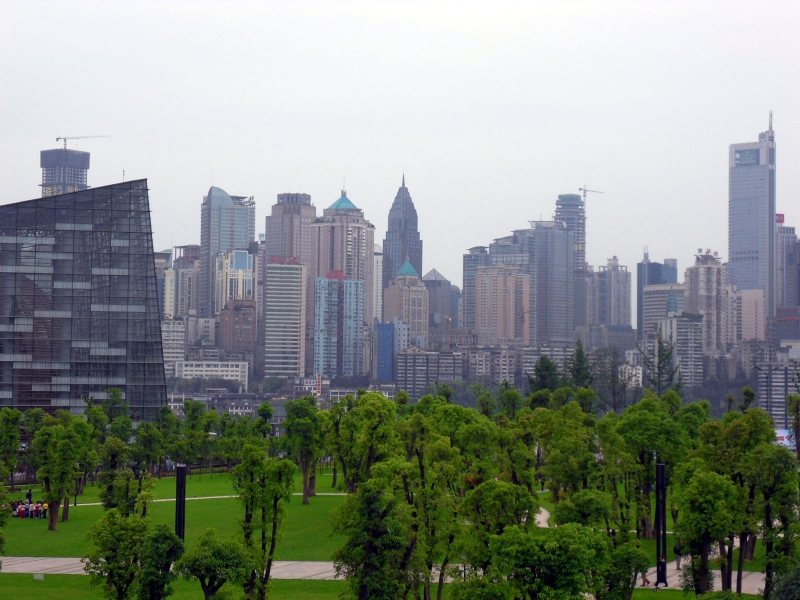
The internet usually introduces Chongqing through visual contradiction.
That instinct is correct, but the interesting question is not just where the strangest photos are.
It is what these strange spaces reveal about how people live.
Verticality here is not a gimmick
In many cities, dramatic architecture is a designed statement.
In Chongqing, much of the drama feels like a practical solution taken to its logical extreme.
That is why places like Liziba Station, short Kuixing-style roof-level detours, and Baixiangju Apartment feel more convincing than novelty attractions. They do not merely perform weirdness. They show a city that had to keep inventing new levels because flatness was never available.
If you want the practical route version, Chongqing Cyberpunk City Walk: The Route That Makes the City Finally Click and Liziba Station in Chongqing are the strongest next reads.
Chongqing trains your body before it rewards your eye
This is one reason the city feels more demanding than Shanghai or Chengdu.
You do not simply look at Chongqing. You climb it, descend it, cross it, and misread it before you finally understand it. A traveler who arrives expecting easy scenic consumption can get frustrated. A traveler willing to accept friction usually comes away fascinated.
That is why the city’s strange levels are more than a meme. They create a specific urban psychology:
- people become spatially adaptive
- shortcuts become cultural knowledge
- stamina becomes ordinary
- orientation is learned through repetition, not neat geometry
This is a city where movement itself becomes character.
The Steam: industrial memory, bunker afterlives, and the heat of ordinary life
The second mistake foreigners make is imagining Chongqing as a purely futuristic city.
Its surfaces may look futuristic at night. Its bones are often industrial, improvised, and heavy.
Bomb shelters explain more than one evening trend
The reuse of old air-raid shelters is one of the clearest examples.
Visitors often encounter this first through bomb-shelter hotpot or bunker-style bars and think of it as atmospheric branding. But the stronger reading is historical and material. These underground spaces belong to a city that spent decades adapting to danger, compression, humidity, and shortage through built toughness.
When a former shelter becomes a hotpot room, a bar, or another piece of public life, Chongqing is not pretending to be rugged. It is showing how ruggedness remained useful.
If this layer interests you, What to Eat in Chongqing for First-Time Visitors and What to Do in Chongqing at Night for First-Time Visitors are the practical child pages.
Industry still shadows the aesthetic
One reason Chongqing feels different from polished river cities is that steel, concrete, fog, steep retaining walls, tunnels, and reused working spaces still shape the atmosphere. Even when the city is beautiful, it is rarely delicate.
That gives Chongqing a kind of urban palette many Western readers instantly recognize through science fiction or post-industrial cinema. The references can be useful, but only lightly. This city may remind you of Blade Runner, Ghost in the Shell, or some impossible liveable version of a concrete megastructure. Yet the essential difference is warmth: beneath the hard shell is one of the most socially and gastronomically heated cities in China.
Testbed 2 and the rougher cultural afterlife
Travelers looking for a more edited industrial-creative layer should not stop at skyline viewpoints. Testbed 2 and some of the city’s adaptive-reuse cultural zones matter because they show how Chongqing metabolizes former working spaces rather than erasing them cleanly.
This is not always the polished art-district logic of Shanghai. It often feels rougher, more provisional, and more faithful to the city’s heavier textures.
The Spine: labor, stamina, and the human scale inside the monster
This is the part of Chongqing that internet admiration often misses.
The city can look machine-like from a distance. Up close, it is a city of bodies.
Stairs are social history
In Chongqing, steps and slopes are not charming old details. They are evidence of what ordinary life demanded from generations of residents. To live here well has long meant learning how to carry, climb, improvise, and continue.
That is part of why the city’s older labor icons still hold emotional power. Even as specific forms of transport and work disappear, the image of the porter, the stair-climber, the dockside hauler, or the indefatigable older resident moving quickly through a punishing incline still feels believable here.
You do not need romantic nostalgia to respect that. It is simply one of the clearest ways the city’s physical environment shaped temperament.
Jianghu is a better word than cool
Foreign writing about Chongqing often reaches too quickly for words like hardcore, wild, or crazy.
Those words catch the surface, but they miss the ethics.
Jianghu is the more useful local concept. It suggests a rough civic code made from boldness, mutual reading, practical loyalty, appetite, bluntness, and the ability to survive outside elegant systems. In Chongqing, that does not necessarily mean outlaw romance. More often it means the city still respects people who can endure, carry their weight, and move through difficulty without theatrical complaint.
That is why Chongqing can feel fierce without always feeling cold.
The city is full of unadvertised stamina
What many travelers remember most is not one famous attraction, but a sequence of smaller human impressions:
- an elderly resident taking a staircase at a speed that embarrasses you
- a food worker handling punishing heat without apparent drama
- a late-night street that still feels materially alive, not only decorative
- ordinary city competence operating under conditions that would exhaust visitors much faster
This is the emotional core beneath the skyline.
Food in Chongqing is less a cuisine than a pressure system
Foreigners often treat Chongqing hotpot as an extreme-sport meal.
That is understandable.
But the city reads more clearly when food is understood as a social response to labor, humidity, compression, and appetite rather than as pure spectacle.
Hotpot is not only spice, but atmosphere
A good Chongqing hotpot room teaches you multiple things at once:
- how people share space
- how heat changes social rhythm
- how noise, sweat, spice, and repetition become part of pleasure
- how little distance the city keeps between hardship and enjoyment
That is why one bomb-shelter hotpot or one more local non-touristy meal can explain more about Chongqing than another sequence of skyline decks.
If food is your main entry point, Best Chongqing Hotpot for First-Time Visitors, What to Eat in Chongqing for First-Time Visitors, and Best Chongqing Street Snacks for First-Time Visitors belong beside this feature.
Late-night appetite matters here
Chongqing is one of those cities where the night does not belong only to views and cocktails. It belongs to hunger. That is one reason the city can feel more grounded than purely scenic night capitals. Even the most dramatic skyline often sits near someone eating something oily, spicy, improvised, or restorative.
If you want the operational version, What to Do in Chongqing at Night for First-Time Visitors is the stronger supporting page in the cluster.
Nights in Chongqing are best when they stay selective

This is where many visitors get the city wrong.
They think Chongqing’s night must be maximized because it looks so cinematic.
Usually the opposite is true.
Protect one iconic night, then choose one rougher night
Most strong Chongqing trips benefit from two different evening registers:
- one classic skyline or riverside night
- one rougher, food-heavier, bunker-led, or more local-feeling night
That contrast keeps the city from flattening into only one mood. Best Chongqing Skyline Views for First-Time Visitors solves the first branch. Where to Eat in Chongqing for First-Time Visitors and What to Do in Chongqing at Night for First-Time Visitors solve the second.
Do not treat every vertical stop like a night stop
The city’s most famous visual oddities can become repetitive if every evening is built around another scenic proof of weirdness. Often the smarter move is to let the day teach the geography and let the night carry only one strong climax.
That is especially true if the trip includes Hongyadong, Nanshan Yikeshu Viewing Platform, or Nanbin Road. Choose one night to be theatrical. Let the others stay human.
Practical details that actually improve Chongqing
This kind of feature should still help people travel better.
Hotel area matters more here than in easier cities
In Chongqing, where you stay can decide whether the city feels exhilarating or exhausting.
For many visitors:
- Jiefangbei works best for first-time centrality and lower-friction access
- Nanbin Road works when skyline mood matters more than pure transport convenience
- Guanyinqiao can work for a younger, more modern, more food-and-nightlife-oriented branch
If the hotel decision still is not clear, Best Area to Stay in Chongqing for First-Time Visitors, Jiefangbei or Nanbin Road: Where to Stay for First-Time Visitors, and Guanyinqiao or Jiefangbei for First-Time Visitors are higher-value pages than many attraction lists.
Movement will cost more energy than you think
Even experienced urban travelers can underestimate Chongqing because distances on the map do not reveal vertical effort, transfer awkwardness, or how tiring repeated climbs become.
That is why Chongqing Travel Guide for First-Time Visitors matters so much. It is not just a transport page. It is a morale page.
Solve payment and ride-hailing before you arrive
Chongqing is not the city where you want daily-use friction. Solve payments, apps, and late-night Didi expectations early. The city is better when its roughness is atmospheric, not administrative.
Keep How to Pay in China and How to Use Didi in China close.
A better three-day shape for this version of Chongqing
If you want Chongqing to feel profound rather than merely photogenic, this is a stronger shape.
Day 1: Learn the city’s geometry
Build around:
- one vertical-city route
- one manageable evening finish
- no attempt to prove you can conquer every famous oddity at once
This is the day when Chongqing should become legible.
Day 2: Heat and underground afterlife
Use the city for:
- one serious food block
- one shelter or heavier urban-texture layer
- one evening that feels less scenic and more embedded
This is the day when Chongqing becomes material, not just visual.
Day 3: Choose scale or depth
Choose one:
- a bigger skyline-and-river day
- a rougher local-food-and-street-life branch
- a museum or industrial-memory layer
- a side-trip logic if the city is being paired with something bigger
This is the day when Chongqing becomes your city, not only the internet’s.
Who will love this version of Chongqing
This deeper Chongqing tends to work especially well for travelers who like:
- urban intensity
- industrial afterlives
- terrain and architecture as character
- food that feels inseparable from climate and labor
- cities where beauty arrives through compression, friction, and endurance rather than elegance
The real force of Chongqing
The real force of Chongqing is not that it resembles a science-fiction city.
It is that it never stopped being a working city.
That is why the neon feels earned. Why the bomb shelters still matter. Why the hotpot feels less like performance than like necessity turned into pleasure. Why the strange levels feel like adaptation rather than spectacle. Why the city can seem brutal from a distance and deeply human up close.
Chongqing does not charm in a gentle way.
It overwhelms first, then explains itself.
And once it does, very few cities feel this alive.
FAQ
Is Chongqing only worth visiting for cyberpunk skyline photos?
No. The skyline and strange levels matter, but Chongqing becomes much more rewarding when travelers also make time for bomb-shelter culture, working-city neighborhoods, deeper food rituals, and one slower attempt to understand how people actually live inside the terrain.
Why does Chongqing feel so different from Beijing, Shanghai, or Chengdu?
Chongqing is shaped by steep geography, river trade, industrial history, wartime infrastructure, and a stronger culture of physical adaptation. That combination makes the city feel more compressed, louder, rougher, and more visually forceful than many other major Chinese cities.
What kind of traveler tends to love this deeper version of Chongqing?
It works especially well for travelers who like urban intensity, food, architecture, industrial afterlives, and cities that reveal character through friction rather than polish.