Chengdu
Chengdu, The Underground Oasis: Where Anyi and Youth Culture Still Share the Same Streets
Chengdu reveals itself in tea steam, queer ease, Yulin side streets, and the soft confidence of a city that lets youth culture sink into ordinary life.
Reported city features, practical travel notes, and destination coverage across China.
Chengdu
Chengdu reveals itself in tea steam, queer ease, Yulin side streets, and the soft confidence of a city that lets youth culture sink into ordinary life.

Foreign travelers often arrive in Chengdu expecting two things.
Pandas, and a soft-focus idea of leisure.
They leave talking about something harder to summarize: a city where tea-house calm, street fashion, neighborhood bars, queer-friendly ease, breakfast rituals, and underground music somehow belong to the same urban temperament.
That is what makes Chengdu different.
Beijing can feel ceremonial. Shanghai can feel fluent and highly edited. Chengdu often feels emotionally available. It gives people room to exhale, and that quality matters more than many landmark lists can explain.
If you want the rest of our Chengdu coverage in one place, start with the Chengdu destination hub.
This guide is for readers who want a better answer to questions like these:
If your question is narrower, these pages may be the better tool:
The strongest deeper Chengdu trip usually balances three versions of the city:
If you only do pandas and old streets, Chengdu can feel pleasant but incomplete.
If you only chase nightlife, you miss the social softness that makes the city’s nightlife meaningful in the first place.
The richer version lets Chengdu feel both grounded and restless.
Travelers sometimes reach for Berlin, Portland, or a softer West Coast city as shorthand.
The comparison can help, but only lightly.
What people are usually trying to describe is this:
Chengdu is one of the few major Chinese cities where relaxation does not read as passivity.
Local words such as anyi and ba shi are useful here. They point not only to comfort, but to a feeling that life can be properly inhabited instead of merely optimized. In travel terms, that means Chengdu often feels less performative than outsiders expect. People linger. Meals stretch. Public space still works. A small bar can stay modest. A tea room can be central to the day rather than an old-fashioned side activity.
That cultural logic matters because it gives younger urban life a different backdrop. In Chengdu, experimentation does not always need a glossy stage. It can happen beside a breakfast stall, inside a neighborhood cafe, or after an old tea-house afternoon.
It is easy to make Chengdu too symbolic.
Pandas stand for softness. Hotpot stands for Sichuan intensity. Jinli or Kuanzhai Alley stand for “traditional atmosphere.”
All of that is real, but none of it fully explains the city.
The deeper Chengdu often begins in ordinary-use places:
That is why a traveler who spends one careful half-day in local Chengdu can come away with a stronger memory than someone who only moved between headline stops.
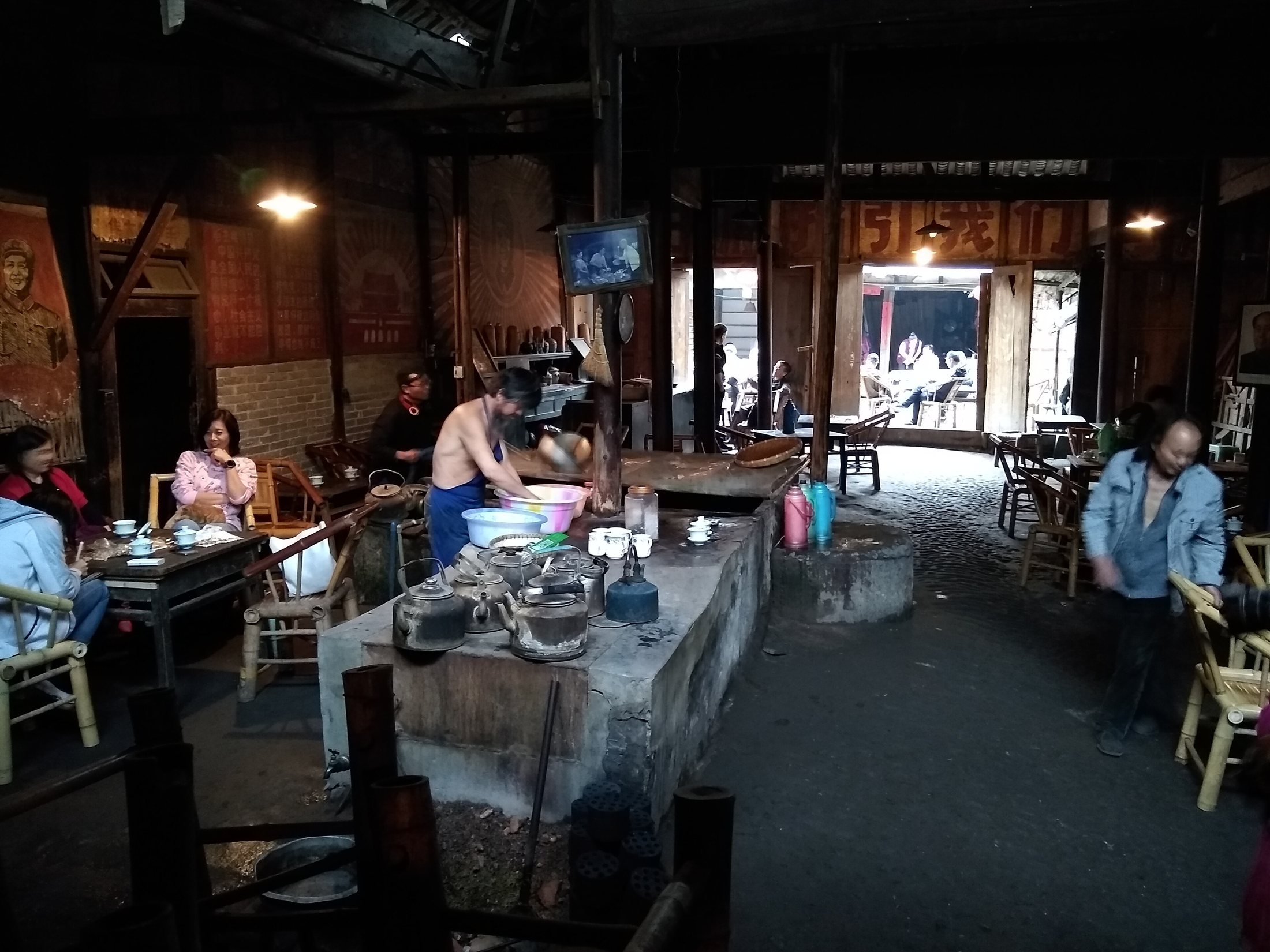
One of Chengdu’s great misunderstandings is that its slowness must mean a lack of energy.
In fact, the city is often vibrant precisely because it is less obsessed with visible strain.
For foreign visitors, tea houses can look like a charming old layer attached to a modern city.
That is too shallow.
Tea in Chengdu is often part of the city’s operating system. It is where people meet, wait, gossip, reset, and let time become social rather than empty. Even when the setting is humble, the function is sophisticated.
If you want the practical version of this, Chengdu Tea House Guide: Where the Slow City Still Feels Real is the strongest next read.
Chengdu is one of the best Chinese cities for travelers who understand cities through appetite.
Breakfast here is not only fuel. It is rhythm.
The city often reveals itself in:
That sequence helps explain the city’s emotional logic better than another generic “best things to do” roundup ever could. If that sounds like your entry point, Chengdu Tea House Guide and What to Eat in Chengdu for First-Time Visitors belong beside this feature.
If one neighborhood helps foreign readers understand why younger people fall for Chengdu, it is usually Yulin.
This is not because Yulin is the only interesting district in the city.
It is because Yulin often shows the overlap that makes Chengdu special:
Travelers sometimes expect a district like this to feel fully gentrified or carefully branded.
Yulin often feels more mixed than that.
Its interest lies in coexistence. The district still works as a neighborhood, not just as a destination concept. That is one reason it feels more convincing than many polished creative quarters in other cities.
If you want the practical district version, go next to Yulin in Chengdu: Is It Worth Visiting on a First Trip? and What to Do in Chengdu at Night for First-Time Visitors.
Among foreign travelers and many young Chinese, Chengdu has a durable reputation for being easiergoing, more permissive in tone, and less socially rigid than outsiders expect from mainland China.
That reputation should be read carefully.
It does not mean a Western-style identity district, constant public signaling, or a city organized around explicit counterculture branding.
What it often means instead is:
This is one reason queer travelers often research Chengdu with real hope. The useful expectation is not spectacle. It is relative ease. A city where many visitors feel less watched, less hurried, and less forced into one script.
If that layer matters to your trip, What to Do in Chengdu at Night for First-Time Visitors is the more practical child page.
In some cities, youth culture lives inside designated creative zones and branded districts.
In Chengdu, it often feels more dispersed and more breathable.
You notice it in:
Shanghai style often feels refined and highly calibrated.
Chengdu style can feel freer, stranger, and sometimes a little spicier. That difference is not only visual. It reflects a city where attitude matters as much as polish.
If you want a lighter daytime version of this contemporary Chengdu, Best Chengdu Cafes for First-Time Visitors and Chunxi Road and Taikoo Li in Chengdu are useful next reads.
One reason Chengdu surprises culturally curious visitors is that its softer daytime temperament can coexist with a serious music appetite after dark.
For many foreign visitors, Chengdu’s most interesting contemporary edge appears not in big commercial clubs, but in smaller music-first rooms, livehouses, and nights where crowd and sound matter more than overt nightlife theater.
This is where the city starts to feel more subcultural than scenic.
The point is not that every night becomes legendary. The point is that Chengdu has room for people who care about:
If this is your branch, the practical next page is What to Do in Chengdu at Night for First-Time Visitors.
Travelers who only read nightlife roundups may imagine Chengdu as a simple riverside bar city.
Jiuyanqiao can be fun, and for some trips it deserves one evening. But the city’s more interesting younger identity is often distributed between neighborhoods, smaller rooms, cafes, design-minded commercial blocks, and selective nights rather than one district alone.
That is another reason the city feels more layered than its stereotypes.
This is where many editorial features fail. They explain atmosphere but not how to use it.
If you stay too far from the kind of city you actually want, Chengdu can flatten.
For many visitors:
That is why Best Area to Stay in Chengdu for First-Time Visitors and Central Chengdu or Yulin: Where Should First-Time Visitors Stay? are higher-value pages than many attraction lists.
Yes, the panda base matters.
It is one of Chengdu’s signature experiences, and many travelers would regret skipping it.
But a weak Chengdu trip lets the panda visit consume the city’s identity. A stronger one uses the panda morning as one emotional register, then gives equal respect to food, neighborhood life, tea, and one younger evening.
This may sound minor, but it is central to the city’s appeal.
If every afternoon and night is fully pre-committed, Chengdu loses some of the looseness that makes it memorable. Leave one block open for a second tea, a cafe detour, a Yulin drift, or a dinner that runs longer than planned.
That is not inefficiency here. It is literacy.
Chengdu feels easy once the basics are handled:
Keep How to Pay in China, What Apps You Need for a China Trip, and How to Get Around Chinese Cities close.
If you want Chengdu to feel textured rather than repetitive, this is a stronger shape than forcing every famous name into one route.
Build around:
This is the day when Chengdu should lower your pulse.
Use the panda morning properly, then let the later day pivot:
This is the day when Chengdu stops being only soft and starts showing its contemporary personality.
Choose one:
This is the day when Chengdu becomes specific to you instead of staying generic.
This deeper Chengdu tends to work especially well for travelers who like:
The real pleasure of Chengdu is not that it is lazy.
It is that it is permissive with time.
It lets breakfast become a mood, tea become an afternoon, dinner become a social event, and nightlife become a selective extension rather than a mandatory performance. It gives youth culture enough oxygen to look local instead of imported. It makes room for style, softness, appetite, and experimentation to share the same streets.
That is why Chengdu stays with people.
Not because it shouts the loudest.
But because it knows how to let a city breathe.
No. Those matter, but Chengdu becomes far more memorable when travelers also make time for tea-house culture, Yulin neighborhood life, cafes, slower mornings, and one younger nightlife or music layer.
Usually because Chengdu combines a relaxed social rhythm with strong food culture, visible youth style, mixed neighborhood life, and an easier sense of self-expression than many visitors expect.
It works especially well for travelers who value atmosphere, neighborhoods, food, music, and cultural observation more than collecting the maximum number of formal attractions.
Publication Note
First published 7/10/2026 · Updated 7/10/2026
We revisit city guides when route logic, stay advice, or local assumptions shift enough to change the decision a reader might make.
Back To The City
The city page gathers stays, neighborhoods, pacing, and practical reads in one place.
Planning Support
When the city is clear but the pacing, hotel geography, or onward shape still is not, a fresh read often reveals the real sticking point.
About The Author
Southwest Features Editor
Hannah Zhou is a Southwest features editor at China Travel Notes. She leads Chengdu and Chongqing coverage, especially pieces where food, nightlife, neighborhood energy, street culture, and urban mood matter as much as standard sightseeing. Her work helps readers understand why two cities can feel equally famous but radically different on the ground.
Chengdu
A strong first Chengdu trip usually needs one panda morning, one slow tea-or-neighborhood block, and one serious food evening before it needs more attractions.
Chengdu
Chengdu can be a very good 240-hour transit city if the trip is built around one panda morning, one slower tea or neighborhood block, and several strong meals.
Arrival And Basics
For most first-time visitors, the strongest China payment setup is not one perfect method but a layered stack: one main wallet, one backup card or second wallet, and some cash.
Arrival And Basics
Most first-time visitors do not need every famous China app. They need a small stack that clearly covers payment, messaging, maps, trains, and local transport.