Key Takeaways
- Pengzhen Old Teahouse is usually worth it when you want older, more atmospheric tea-room texture than central Chengdu's easier classics can offer.
- It is usually weaker than People's Park for a simple first-time default, but stronger for photographers and travelers who care about lived-in mood.
- The right way to visit is quietly and respectfully, because the place works best as a real local environment, not as a staged content backdrop.
- For many first-time visitors, this is a selective side trip, not the only tea answer the city needs.
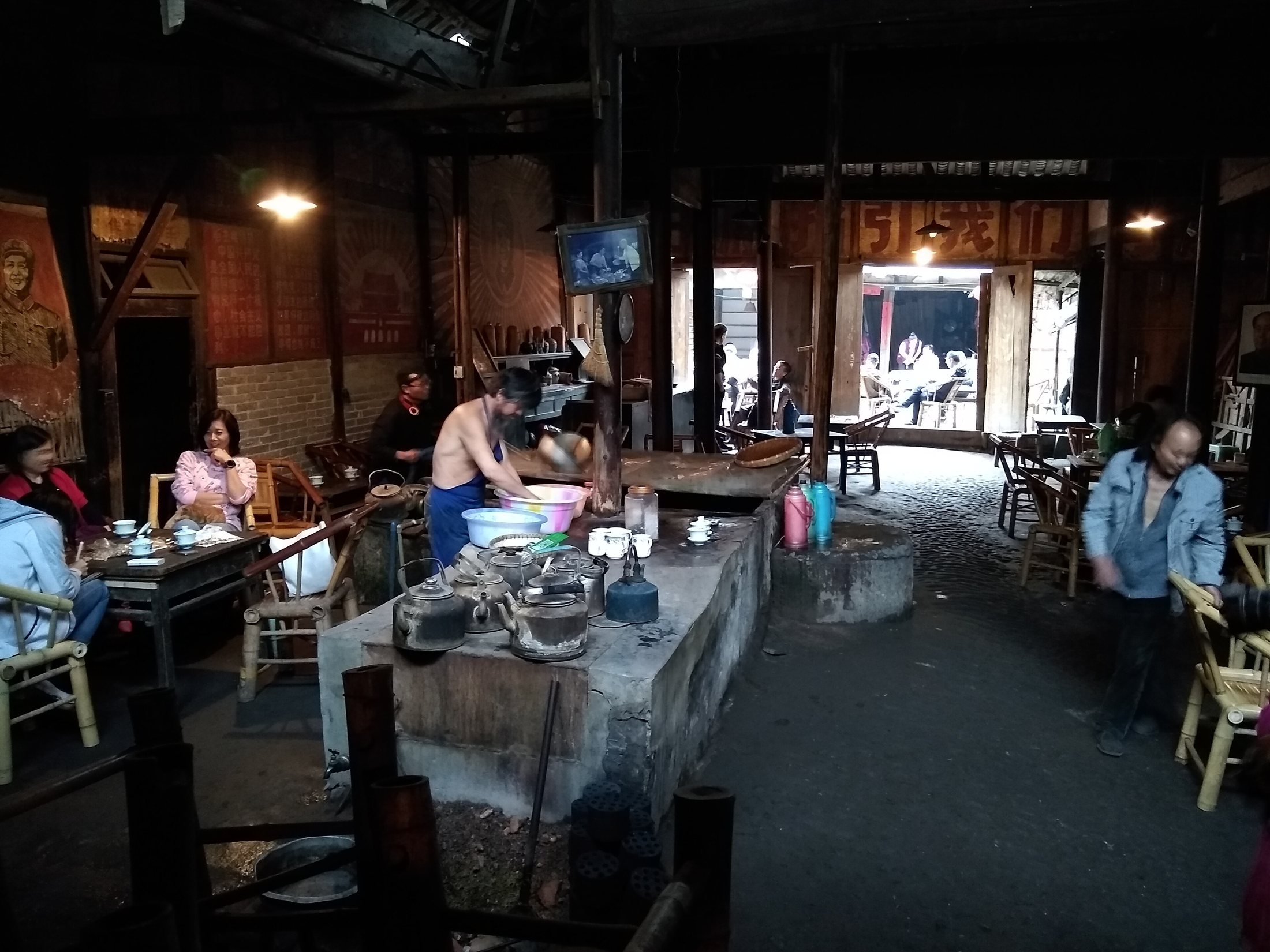
Pengzhen Old Teahouse is the kind of place that can either feel magical or uncomfortable depending on how you arrive.
If you come for quiet observation, tea, and old-room atmosphere, it can be one of the most memorable slower Chengdu detours.
If you arrive treating the room as a content studio, you are doing the place wrong.
Who this page is for
Use this page if you are asking:
- should I go to Pengzhen instead of People’s Park?
- is it worth the detour from central Chengdu?
- is it a real tea stop or mainly a photography thing?
The short answer
Pengzhen Old Teahouse is usually worth it when:
- you care about atmosphere more than convenience
- the trip wants one older, less polished tea-room experience
- you are willing to visit quietly and respectfully
It is usually less worth it when:
- you only need Chengdu’s easiest tea-house answer
- your schedule is tight
- you mainly want a place to shoot people rather than have tea
What it is best for
It usually works best for:
- photographers with restraint
- travelers who love lived-in interiors
- readers who want Chengdu’s tea culture to feel older and less curated
It is usually weaker for:
- the easiest first-time tea stop
- travelers who need fully central convenience
- anyone expecting a polished attraction product
Pengzhen vs People’s Park
Choose Pengzhen if:
- mood matters more than convenience
- you want a room that feels older, darker, and more lived-in
Choose People’s Park if:
- you need the easiest classic Chengdu tea-house answer
- the day already belongs in central Chengdu
- you want tea culture with much less extra effort
For many first-time visitors, People's Park is the smarter base answer and Pengzhen is the deeper texture answer.
Pengzhen vs Heming Teahouse
Choose Pengzhen if:
- you want atmosphere first
Choose the Heming Teahouse branch if:
- you want a more legible, central, first-time tea-house experience tied to People’s Park
How should you visit?
This matters more here than on many other pages.
The strongest version is simple:
- sit down
- drink tea
- observe quietly
- photograph lightly, not aggressively
The place works because it is still a real social environment.
Treating everyone in it like scenery weakens the experience for everyone.
When does it improve the trip most?
It often improves the trip most when:
- Chengdu already has its core city layers secure
- you want one slower half day with more human texture
- the trip would benefit from one tea stop that feels less polished than the obvious default
Common mistakes
- going only for photos and not for tea-room rhythm
- forcing it when People’s Park already solves the tea question
- behaving as if the room exists for visitors instead of for the people who actually use it
Which page to read next
Before You Go
- Choose Pengzhen for atmosphere and tea-room texture, not for polished convenience.
- Use a low-key visit style and avoid treating other patrons like props.
- Do not force it if People's Park already gives the tea-house layer your trip needs.
FAQ
Is Pengzhen Old Teahouse worth visiting in Chengdu?
Usually yes if you want a more lived-in and atmospheric tea-room stop than the easiest central options. It is usually less worth it if your trip mainly needs the simplest first tea-house answer.
Is Pengzhen better than People's Park?
For raw atmosphere and photography, often yes. For convenience and an easier classic Chengdu tea-house stop, People's Park is usually better.
How should visitors behave at Pengzhen Old Teahouse?
Quietly and respectfully. The place works best when visitors have tea, observe gently, and avoid turning local patrons into an unwilling photo set.