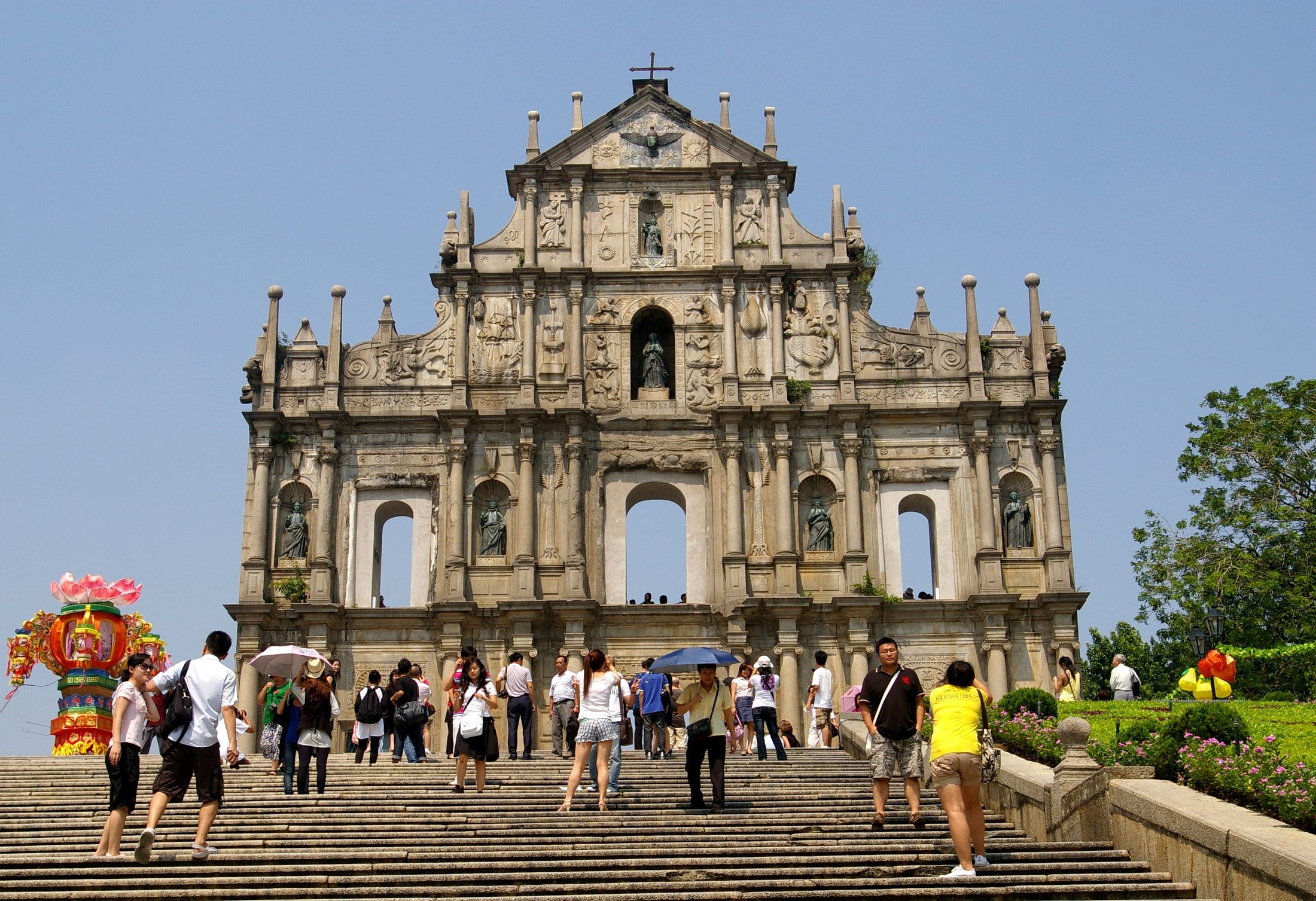
Key Takeaways
- For many first-time visitors, the Ruins of St. Paul's are worth it because they give Macau its clearest single heritage landmark and usually fit naturally inside the old-core day.
- They work best as one protected stop inside a broader Senado Square and historic-center walking block, not as a disconnected one-off detour.
- The site is often stronger than another random old-core hour because it gives the trip one unmistakable Macau image and one clear cultural anchor.
- It becomes weaker when travelers treat it only as a staircase photo stop, arrive at the most crowded moment with no plan, or force it before the rest of the old core makes sense.
Ruins of St. Paul's are one of the few places in Macau that are both completely famous and still usually worth doing.
That is not because the site is huge.
It is because it gives the trip one very clear job:
- one unmistakable Macau landmark
- one strong heritage payoff
- and one point where the old core stops feeling abstract
Who this page is for
Use this page if you are asking:
- are the Ruins of St. Paul’s actually worth my limited Macau time?
- should I protect them even on a short one-day or overnight stop?
- are they stronger than another old-core wander or a faster move to Taipa?
- how much time do they really need?
If the live question already is not whether the old core belongs but what should actually carry the meal there, the narrower execution page is Where to Eat Around Senado Square for First-Time Visitors.
The short answer
For many first-time visitors, yes, Ruins of St. Paul's are worth it.
They are usually worth it when:
- Macau still needs one clearest-possible heritage landmark
- the trip already is protecting the old core around
Senado Square
- the stay is only
1 to 2 days
- you want one sight that instantly makes Macau feel distinct from Hong Kong or a generic resort stop
They are usually less worth forcing only when:
- the old-core branch already is overloaded and needs trimming
- crowds, weather, or energy make the stop feel more like obligation than value
- the route is so short that only the broad heritage center matters and the exact landmark detail is not the real decision
Why the Ruins matter
Current MGTO material still presents the Ruins of St. Paul’s as one of Macau’s signature heritage sights, while the Cultural Affairs Bureau’s current St. Paul page still frames the site as both the famous façade and the remains of the old religious complex behind it.
That matters because the Ruins solve a very practical first-trip problem:
- what is the single clearest heritage landmark Macau wants you to remember?
For many first-time visitors, this is still the answer.
Ruins of St. Paul’s vs Senado Square
Choose Senado Square if:
- the trip still needs the broader old-core structure
- you want one connected heritage walking block rather than one landmark
- the route still is deciding how the district should work at all
Choose Ruins of St. Paul's if:
- the old core already is the chosen Day 1 branch
- you want the landmark that gives the district its clearest visual payoff
- the live question is whether one specific stop deserves protecting inside that old-core walk
For most first-timers, this is not a real either/or.
It is usually:
Senado Square as the old-core anchor- and
Ruins of St. Paul's as the most important landmark within that heritage branch
Ruins of St. Paul’s vs Taipa Village
Choose Ruins of St. Paul's if:
- this is still the main heritage day
- the trip wants Macau’s strongest first-time landmark
- the stay is very short
Choose Taipa Village if:
- the old core already made sense
- the trip wants a softer second-day contrast
- the route now needs neighborhood texture more than one more heritage icon
That is why the Ruins usually are the stronger Day 1 answer and Taipa is usually the stronger Day 2 contrast.
If the live question already is not whether the old core works at all, but whether the peninsula side should add one older spiritual heritage layer beyond the Ruins themselves, the more focused companion page is A-Ma Temple in Macau: Is It Worth It for First-Time Visitors?.
What the Ruins are best for
The Ruins usually work best for:
- one clear old-core highlight
- one visual payoff that helps the city feel memorable fast
- one short but meaningful stop inside a heritage day
- one nearby continuation into surrounding lanes, the forecourt, or the sacred-art-and-crypt layer
They are usually weaker for:
- carrying the entire old-core day by themselves
- replacing the broader heritage walk
- becoming only a quick photo queue with no surrounding context
How much time do they need?
Usually not too much by themselves.
For many first-time visitors, the strongest version is:
- one controlled stop
- inside a broader old-core walking block
- with one nearby continuation that gives the site more context
That often is enough.
The Ruins become weaker when travelers:
- rush up for one photo and leave immediately
- overprotect the landmark but underprotect the surrounding district
- or expect the site alone to behave like a huge museum complex
When do the Ruins improve the trip most?
The Ruins often improve the trip most when:
- Macau is only a short stop
- the route comes from
Hong Kong and needs one unmistakable contrast
- the trip wants one classic heritage image before moving toward food or Taipa
- the old core still needs one stop that feels more decisive than another lane-house wander
They improve the trip less when:
- the old core already feels overfull
- the group is already heritage-saturated
- the day really needs a meal, rest, or district-flow fix more than one more formal sight
Common mistakes
- treating the Ruins like a stand-alone half-day attraction
- climbing up, taking one photo, and leaving without letting the old core connect around it
- forcing the stop at the busiest, hottest moment with no pacing plan
- using the landmark as a reason to weaken
Senado Square or the rest of the heritage branch
Which page to read next
Before You Go
- Use the Ruins as part of a connected old-core walking block, not as an isolated check-in.
- Protect one meaningful continuation nearby such as a heritage lane, museum-and-crypt layer, or real meal.
- Do not expect the Ruins themselves to carry a full half-day without the surrounding district.
- Check current access conditions if your route depends on the museum, crypt, or any special exhibition.
FAQ
Are the Ruins of St. Paul's worth visiting on a first trip to Macau?
For many first-time visitors, yes. The Ruins of St. Paul's are usually worth it because they give Macau its most recognizable heritage landmark and fit naturally into the old-core walking day most travelers already should protect.
Are the Ruins of St. Paul's better than Taipa Village?
Usually yes if the trip still needs Macau's main heritage layer first. Taipa Village is often the softer second-day contrast after the old core and the Ruins already have done the main identity work.
How much time do you need at the Ruins of St. Paul's?
Many first-time visitors only need one controlled stop plus nearby old-core continuations, so it often works as part of a larger walking block rather than as a stand-alone half-day.