Place Guide
CCTV Headquarters in Beijing: The CBD's Real Showstopper
Decide whether CCTV Headquarters deserves time in Beijing and why it works better as a skyline stop than as a normal indoor attraction.
Practical travel planning for first-time visitors to China.
Place Guide
Decide whether CCTV Headquarters deserves time in Beijing and why it works better as a skyline stop than as a normal indoor attraction.
Part Of The Cluster
The strongest place pages help travelers decide how much time to give a place, what to book early, and how to connect it back to the city route instead of treating it like an isolated checklist stop.
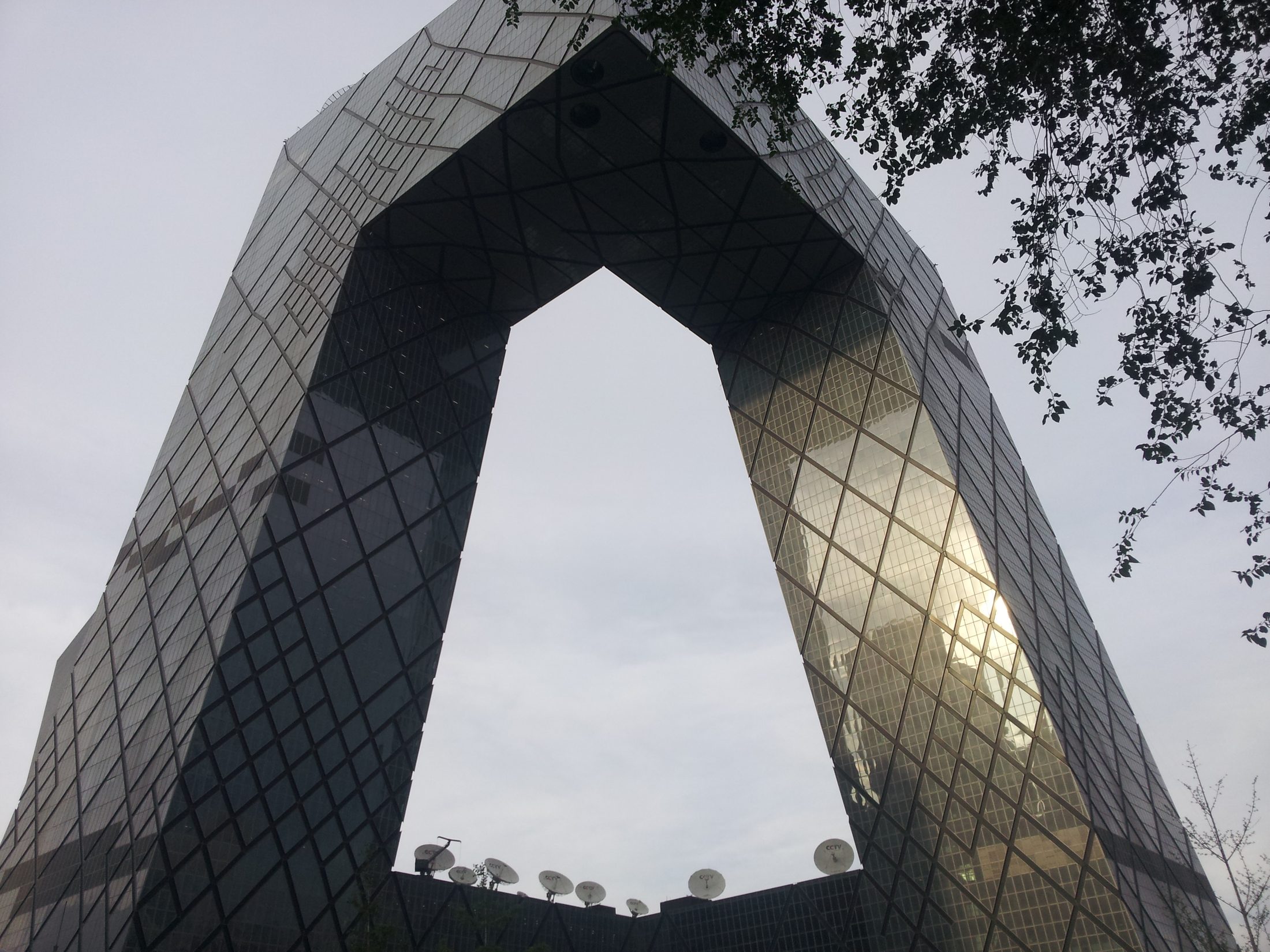
The CCTV Headquarters is the building that makes people who do not normally care about office towers suddenly stop caring that it is an office tower.
It is strange, self-confident, and unmistakably Beijing.
That is why it matters.
This page was checked against current source material on June 28, 2026, including OMA’s project page for CCTV Headquarters, Büro Ole Scheeren’s project page for CCTV, and the Beijing government’s current overview of Beijing CBD. Those sources support the building’s looped form, its role as a Beijing icon inside the CBD, and its status as one of the district’s defining modern landmarks. I did not find a straightforward current public-tourist entry path in the official Beijing travel-facing materials I checked, so the advice below treats the building as an exterior-first landmark. That access conclusion is an editorial inference from current public-facing sources, not a claim of permanent policy.
Use this page if you are asking:
CCTV Headquarters actually worth seeing in person?CBD?If the real question is not the building itself but whether the district belongs at all, start one step up with Where Beijing’s Modern Skyline Finally Clicks: CCTV Tower, China Zun, and the CBD.
The CCTV Headquarters is usually worth it when:
CBD already feels like a plausible selective detourIt is usually weaker when:
Many famous towers are memorable only because they are tall.
The CCTV Headquarters is memorable because it does not behave like a normal tower at all.
It works because:
For many first-time visitors, this is the point where modern Beijing stops feeling abstract and starts feeling visually specific.
Usually no.
For most first-time visitors, the smart assumption is:
If what you really want is a building with a simple ticketed visitor experience, the CCTV Headquarters may not deliver that kind of payoff.
If what you want is a building that changes how the city reads, it often delivers very well.
Choose China Zun when:
Choose the CCTV Headquarters when:
For many architecture-minded first-time visitors, CCTV is the building they remember more vividly and China Zun is the building that completes the skyline around it.
Choose Beijing Olympic Park when:
Choose the CCTV Headquarters when:
A realistic CCTV Headquarters time budget is:
20 to 30 minutes for a targeted architecture stop30 to 45 minutes if you want to walk, photograph, and place it properly1 to 2 hours only if you are giving the wider CBD a real role in the dayIt usually should not become a half-day mission by itself.
The CCTV Headquarters usually fits best:
4-day or longer Beijing tripIf the live question still is not only this building but which one modern branch deserves your remaining time, use How to Choose One Modern Beijing Detour: CBD, Olympic Park, 798, or Shougang?.
The CCTV Headquarters is strongest for:
It is weaker for:
CCTV Headquarters like a normal tower you simply go upCBD any contextUsually yes for travelers who genuinely care about architecture or want one strong modern-Beijing skyline stop, especially as part of a wider CBD block.
Do not plan around that as a normal first-trip expectation. The building is much clearer today as an exterior landmark than as a straightforward visitor attraction.
Often yes. Olympic Park is easier and broader, while the CCTV Headquarters is the sharper choice for travelers who care specifically about bold contemporary building form.
history-first travelers
Beijing is the strongest first-stop city for travelers who want imperial landmarks, museums, hutong neighborhoods, strong food variety from local classics to regional Chinese cuisines, and straightforward high-speed rail connections.
Beijing
A practical Badaling Great Wall guide for first-time Beijing visitors who want to know when Badaling is the right Wall choice, how it differs from Mutianyu, and why the most famous section is not always the best fit for every trip.
Beijing
Use this Baipu Temple guide to decide when its surreal visual style adds something memorable to a Beijing trip, when it is too niche to justify, and how it compares with easier temple stops inside the city.
Beijing
A practical Beihai Park guide for first-time Beijing visitors who want to understand what the park feels like, why it helps a packed itinerary breathe, and how much time it usually needs.
Beijing
Use this Beijing guide to decide how many days to stay, what to prioritize first, where to stay, and how to keep the city from feeling too big or too tiring.
Beijing
Use this Beijing CBD guide to decide whether CCTV Headquarters, China Zun, and the city's modern skyline deserve time, who this area suits, and when it fits best.
Beijing
Choose the right modern Beijing detour by matching CBD, 798, Olympic Park, and Shougang to your trip style, time budget, and the city experience you actually want.
Choose The Right Route
Use this first China trip planning guide to decide how many cities fit, when trains or flights start controlling the route, and what to lock first.
Solve The Practical Basics
Learn when metro is best in Chinese cities, when taxi or Didi saves real time, and how hotel location can make sightseeing days smooth or unexpectedly tiring.
Need Help Planning?
If the place matters, but the timing, booking order, or surrounding city day still feels fuzzy, this is a good point for a light planning check.
About The Author
China Travel Notes Editorial Desk
The Editorial Team reviews city guides, trip basics, and route-planning pages with a practical first-time visitor lens. The goal is to turn useful Chinese-language travel knowledge and booking realities into clearer English planning advice.