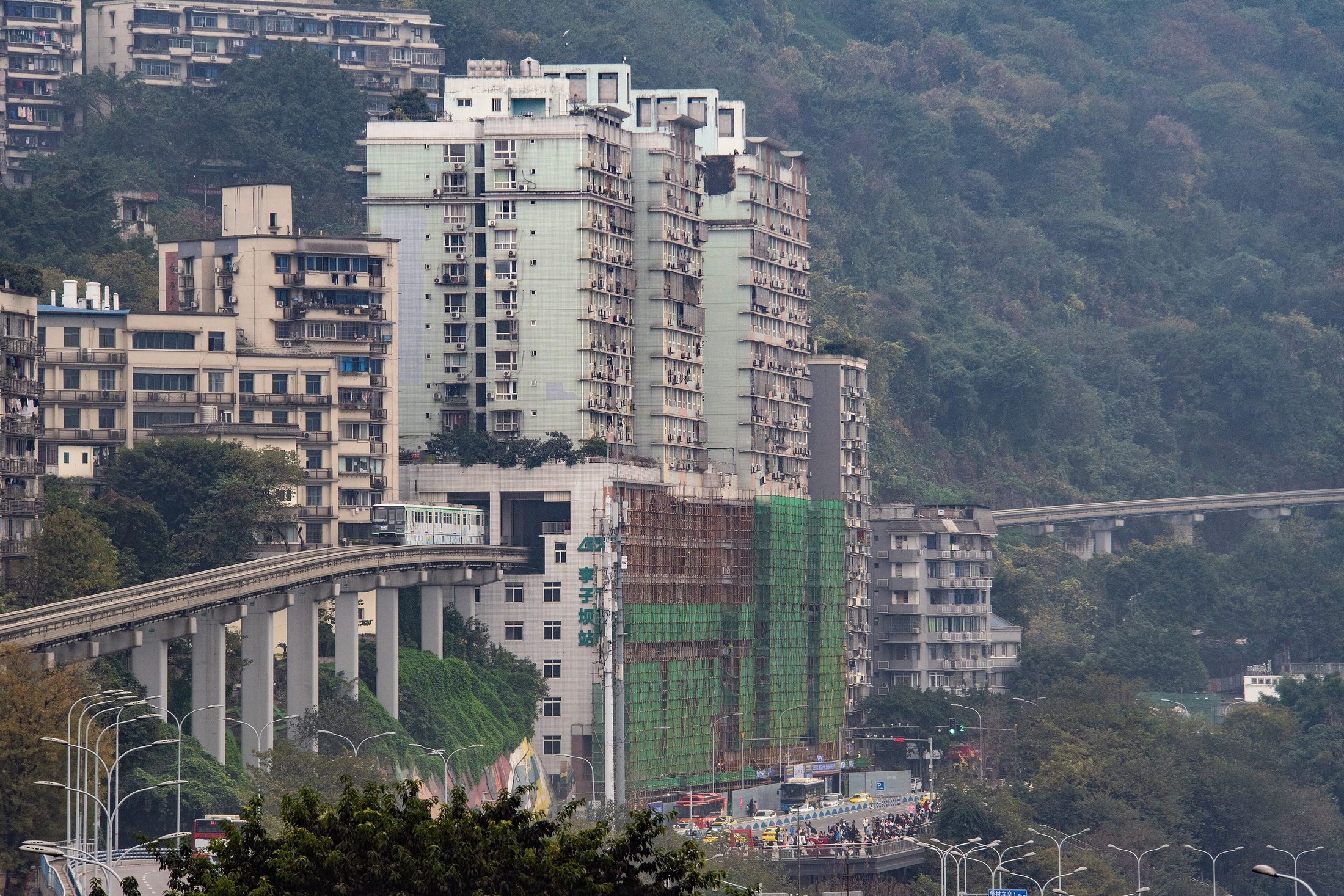
Key Takeaways
- Baixiangju is usually worth it as a short supporting stop if you are fascinated by Chongqing's vertical city form and are willing to visit with real etiquette.
- It is not a core first-trip anchor, and it should never be treated like a playground inside a residential complex.
- For many first-time visitors, Liziba is the easier city-oddity stop, while Baixiangju is the stronger deep-urban texture stop.
- The right version of Baixiangju is brief, respectful, and route-aware.
Baixiangju is one of those Chongqing places that explains the city instantly.
It is also one of those places that can be ruined by the wrong visitor behavior just as instantly.
This is a real residential complex.
That is the first planning fact, not a footnote.
Who this page is for
Use this page if you are asking:
- is Baixiangju actually worth seeing?
- is it better than Liziba for Chongqing’s urban weirdness?
- can I visit without making the stop feel disrespectful?
The short answer
Baixiangju is usually worth it when:
- you are genuinely curious about Chongqing’s vertical urban form
- you can treat the stop as brief and respectful
- the route already has stronger core layers protected
It is usually less worth it when:
- Chongqing is only a very short stop
- you mainly want an easy famous photo point
- the group will treat a residential building like an interactive set
What it is best for
It usually works best for:
- urban-form enthusiasts
- photographers with restraint
- travelers who want Chongqing to feel stranger and more physical than a skyline alone can show
It is usually weaker for:
- broad first-time sightseeing
- groups that need clean, easy attraction logic
- anyone hoping the building itself should become a major half day
Baixiangju vs Liziba
Choose Baixiangju if:
- you want the deeper residential-city texture
- you care more about Chongqing’s lived geometry than one famous transport oddity
Choose Liziba Station if:
- you want the easier first-time stop
- the route needs a lower-friction, shorter city icon
For many first-time visitors, Liziba is the easier answer and Baixiangju is the more intense answer.
Baixiangju vs Hongyadong
These are not substitutes.
Choose Hongyadong if:
- the trip still needs its classic skyline anchor
Use Baixiangju only if:
- the skyline answer already exists
- the trip wants one more vertical-city layer
How should you visit?
This matters more than the usual logistics section.
The right version is:
- enter calmly
- stay in public circulation space
- keep the stop short
- avoid filming into homes
- leave if your presence feels disruptive
If you cannot do that, skip it.
How much time does it need?
Very little.
This place gets worse when people overstay and try to manufacture more “content” than the stop naturally gives.
When does it improve the trip most?
It often improves the trip most when:
- the trip already has one skyline night
- you want one more urban-geometry stop
- the city still feels too postcard-only
Common mistakes
- forgetting it is residential
- protecting more time for it than for stronger Chongqing anchors
- turning quiet public passages into a noisy photo session
Which page to read next
Before You Go
- Treat Baixiangju as a lived-in residential building first and a visitor stop second.
- Keep noise low and avoid blocking passages or pointing cameras into homes.
- Use only public circulation areas and leave quickly if the stop starts feeling intrusive.
- Do not let this short detour replace a stronger core Chongqing evening.
FAQ
Is Baixiangju worth visiting in Chongqing?
Usually yes as a short, respectful urban-geometry stop if you are genuinely interested in Chongqing's vertical city form. It is usually not worth building a major detour or behaving like the complex is an attraction park.
Is Baixiangju better than Liziba?
For deeper residential-city texture, often yes. For easier first-time execution and a simpler famous oddity stop, Liziba is usually better.
How should visitors behave at Baixiangju?
Quietly and respectfully. Stay in public areas, do not block residents, and never photograph into private homes or treat the building like a performance set.